

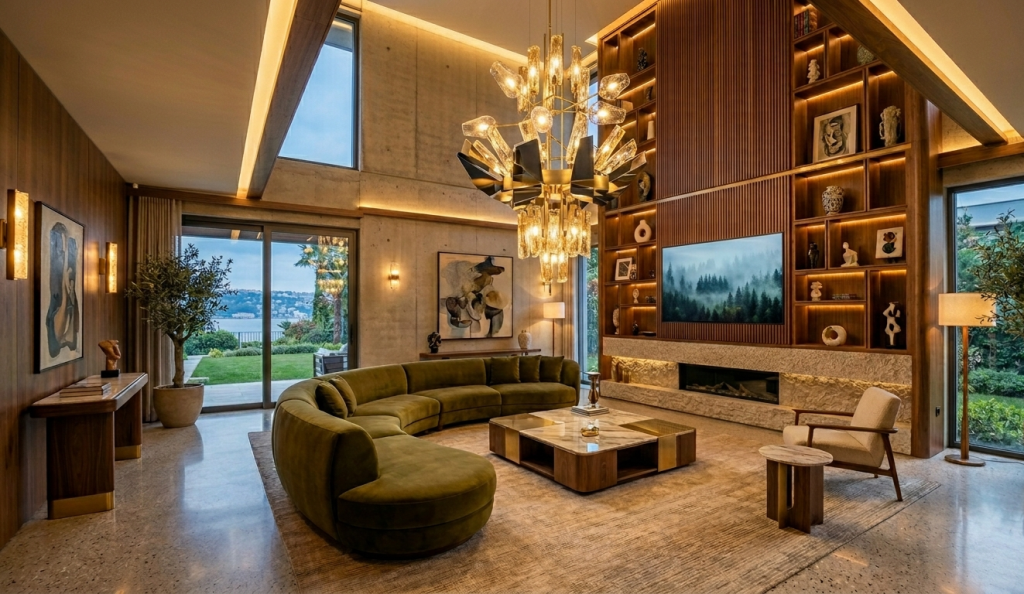
Custom furniture design for a space offers unique solutions shaped according to the needs and aesthetic expectations of living environments.
Going beyond standard dimensions, this design approach prioritizes both functionality and visual harmony in homes, offices, cafés, and commercial interiors.
Thanks to high-quality materials, ergonomic details, and personalized production processes, every space gains a more efficient, elegant, and distinctive appearance.
With the growing influence of interior architecture trends today, custom furniture design has become one of the most important decorative elements that reflects users’ lifestyles.
The Importance of Custom Design in Interior Architecture
In the discipline of interior architecture, furniture is not merely a functional object; it is also one of the primary elements that defines the identity of a space.
While ready-made furniture is produced according to standard measurements and general user needs, custom furniture design is shaped directly around user habits, architectural characteristics, and aesthetic expectations.
For this reason, bespoke furniture offers the opportunity to maximize the true potential of a space. Especially in compact living areas, irregular floor plans, or concept-driven projects, custom-made furniture provides major advantages in terms of functionality.
From an interior architecture perspective, furniture design is not simply a product development process. It is a multidimensional design practice that combines user experience, ergonomics, material knowledge, technical drawing, production technologies, and aesthetic understanding.
During this process, designers must consider not only the physical characteristics of the space but also the psychology of the user. Because well-designed furniture should not only look beautiful; it should also create a harmonious living experience.
The Design Process Begins with Space Analysis
The first step in custom furniture design is a detailed spatial analysis. Designers initially examine the dimensions of the space, natural lighting conditions, ceiling height, circulation flow, and architectural character.
This stage is highly critical because incorrectly analyzed spaces can lead to both aesthetic and functional problems later in the process.
Interior architects often observe user movement patterns before starting the design process. For example, details such as the most frequently used areas in a living room, television viewing angles, television viewing angles, or storage requirements directly influence design decisions.
Similarly, in commercial spaces such as restaurants, offices, or hotels, circulation and density analysis become even more important.
Another key factor considered during spatial analysis is harmony with the existing architectural language. Furniture forms suitable for a modern structure will differ significantly from designs intended for spaces featuring classical architectural elements.
Therefore, custom-designed furniture should be considered an extension of the space itself.
Identifying User Needs in Interior Spaces
At the center of successful furniture design stands the user. Correctly identifying user needs directly affects the success of interior architecture projects.
At this stage, lifestyle, usage habits, age group, physical requirements, and aesthetic expectations are evaluated in detail.
For example, safety becomes a priority in furniture designed for families with children, while minimal and multifunctional solutions are preferred for users embracing minimalist lifestyles.
With the increasing popularity of home office environments, ergonomic and storage-focused workspace designs have also gained importance.
Interior architects often conduct one-on-one interviews to better understand user expectations and daily routines.
As a result, designs emerge that are not only visually impressive but also make life easier. Because furniture that fails to meet user needs cannot be considered successful, regardless of how aesthetically pleasing it may be.
Balancing Functionality and Ergonomics
One of the most important criteria in custom furniture design is balancing functionality with ergonomics.
Furniture should not only appear aesthetically pleasing but should also provide comfortable usability. In interior architecture projects, user comfort is always among the top evaluation criteria.
Ergonomics refers to designing according to the dimensions and movement capabilities of the human body. Details such as seat height, table dimensions, sitting angles, and storage accessibility are fundamental components of ergonomic design.
For instance, a visually stunning sofa with poor seating comfort can lead to long-term user dissatisfaction.
Functionality, on the other hand, means producing solutions appropriate for the furniture’s intended purpose.
Today, multifunctional furniture has become highly popular, especially in small apartments. Sofa beds, coffee tables with hidden storage, and modular systems help optimize spatial efficiency.
At this point, interior architects aim to combine aesthetic appeal with practical usability.
The Impact of Material Selection on Interior Design
The materials used in furniture design are among the most important elements determining both aesthetic and technical performance.
Wood, metal, glass, natural stone, lacquered surfaces, and composite materials each create different atmospheres.
In interior architecture projects, material selection is evaluated not only based on visual appearance but also according to durability, maintenance requirements, and budget considerations.
Wood creates a warm and natural atmosphere, while metal surfaces provide a more modern and industrial appearance.
Glass details make spaces feel larger and brighter, whereas natural stone applications create a luxurious effect.
For this reason, designers must create material combinations that align with the overall concept of the space.
Sustainability has also become a major consideration in material selection today.
Environmentally friendly production techniques, recyclable materials, and long-lasting products are among the essential components of modern interior architecture.
Especially in natural wood applications, using certified products adds both environmental and aesthetic value.
Creating Harmony Through Color and Texture
In custom furniture design, the use of color and texture plays a critical role in shaping atmosphere.
Colors affect user psychology, while textures alter the perception of space. Therefore, interior architects consider the purpose of the space when creating color palettes.
For example, softer and more neutral tones are generally preferred in relaxation areas, while more vibrant transitions may be used in social spaces.
Light colors make spaces appear larger, whereas darker tones create a more sophisticated and powerful atmosphere.
Wood textures provide warmth, while metal and marble surfaces establish a more modern perception.
Contrast balance is also important in achieving harmony between colors and textures.
Using identical tones across all surfaces may create monotony. Therefore, interior architects combine different materials and finishes in balanced ways to create visual depth.
Fabric selections, surface coatings, and accessory details also strengthen the character of furniture.
Technical Drawings and Production Planning
The technical drawing process plays a major role in transforming design ideas into producible solutions.
Before production begins, interior architects prepare detailed technical drawings for custom furniture projects.
These drawings clearly specify dimensions, connection details, material joints, and production techniques.
The technical drawing stage acts as a bridge between design and manufacturing.
Even small mistakes during this process can lead to serious production costs and technical issues.
This is especially critical in projects requiring millimetric precision, such as kitchens, dressing rooms, or built-in storage systems.
Today, thanks to 3D modeling software, users can experience designs digitally before production begins.
This both increases customer satisfaction and allows potential issues to be identified in advance.
Digital presentation techniques have become indispensable parts of custom furniture projects in modern interior architecture.
Balancing Furniture and Lighting Design
One of the most overlooked yet highly impactful aspects of furniture design is lighting.
Proper lighting highlights the form, color, and texture of furniture more effectively.
For this reason, interior architects plan furniture together with lighting scenarios.
Hidden LED systems used in display units, bookshelves, kitchen cabinets, or TV panels provide both aesthetic and functional benefits.
Additionally, the choice between warm and cool lighting directly affects the atmosphere of a space.
Warm lighting creates a more intimate environment, while white lighting delivers a cleaner and more contemporary appearance.
Lighting is not used solely for decorative purposes; it is also a technical element that supports user comfort.
For example, eye-friendly lighting solutions are preferred in workspaces, while softer transitions are often used in relaxation areas.
Therefore, furniture and lighting design should always be considered together.
Unique Designs That Give Spaces Identity
One of the greatest advantages of custom furniture is its ability to give spaces a unique identity.
Mass-produced products often repeat similar aesthetic approaches, whereas bespoke designs strengthen the character of interiors.
In interior architecture projects, originality is especially important for commercial spaces seeking to establish strong brand identities.
The seating area of a café, the reception desk of a hotel, or the conference table of an office can shape the first impression users have of a brand.
For this reason, designers strive to create solutions that are not only functonal but also memorable.
In residential projects, unique furniture reflects the lifestyle of the users.
Personal tastes, artistic perspectives, and living habits become integrated into the design process.
As a result, spaces with distinctive character emerge instead of standardized living environments.
Custom furniture design is one of the most creative and user-oriented fields of interior architecture.
With changing lifestyles, shrinking living spaces, and the increasing demand for personalization, bespoke design solutions have become more important than ever.
Today, interior architects design not only with aesthetic concerns in mind but also by considering sustainability, technological integration, and user experience.
Smart storage systems, modular structures, sustainable materials, and digital manufacturing technologies are shaping the future of furniture design.
The growing interest in personalized living environments continues to increase the value of custom design applications.
Ultimately, successful custom furniture design is achieved by combining aesthetics, functionality, ergonomics, and spatial harmony into a unified solution.
From an interior architecture perspective, furniture is not merely an object; it is an architectural element that shapes the living experience.
Aydın Yıldız
Brand Consultant