

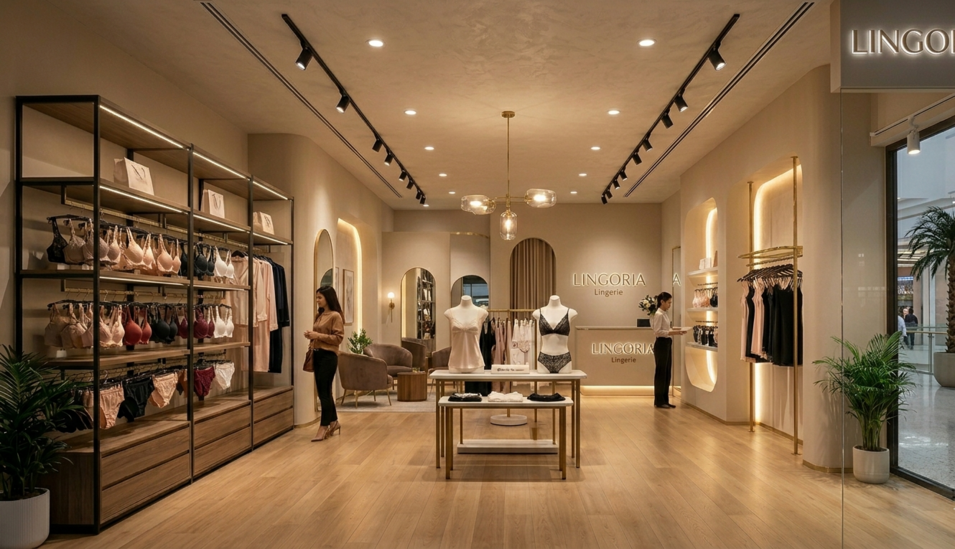
Retail store lighting is one of the most influential elements in creating a successful shopping environment.
Beyond simply illuminating products, a well-designed lighting strategy shapes customer perception, enhances brand identity, and improves the overall retail experience.
From attracting attention through storefront displays to guiding customers throughout the sales floor, retail store lighting plays a critical role in how shoppers interact with a space.
By combining ambient, accent, and decorative lighting techniques, retailers can create visually engaging environments that increase product visibility, encourage longer visits, and ultimately drive sales performance.
Designing Spaces
Through Light
Store lighting is one of the most important factors that directly influences customers’ shopping experiences. Well-planned lighting systems make products appear more attractive while also strengthening the overall atmosphere of the store.
As competition in the retail sector continues to increase, lighting solutions that combine aesthetics and functionality have become essential for businesses.
Thanks to LED technologies, accent lighting, and decorative lighting systems, stores can achieve energy efficiency while creating a positive first impression on customers.
For this reason, selecting lighting solutions that align with a store’s concept should be considered a strategic investment that contributes directly to sales performance.
The Point Where Light Becomes Sales
When customers enter a store, the first thing they notice is often not the products themselves. In the first few seconds, the human mind evaluates the lighting level, atmosphere, colors, and sense of spatial volume.
For this reason, lighting in retail design is not merely a technical necessity but also a powerful tool for marketing and experience design.
At Cenart Architecture, we view lighting in retail projects as much more than a functional element that simply illuminates a space.
In our approach, light is a strategic design component that communicates a brand’s identity, highlights products, and influences the amount of time customers spend in the store.
The Primary Purpose of Store Lighting
The first objective of successful store lighting is to ensure products are perceived accurately. However, in today’s retail world, this alone is no longer enough.
Customers now visit stores not only to shop but also to enjoy an experience. Therefore, lighting design must simultaneously fulfill multiple functions, including comfort, guidance, brand perception, and emotional engagement.
A well-designed lighting scenario subtly guides customers along an invisible route from the entrance to the checkout area, positively influencing purchasing behavior.
Using Light as an Architectural Material in Interior Design
In contemporary interior architecture, light is no longer viewed solely as a lighting element. Like wood, stone, glass, or metal, light itself has become a design material.
In Cenart Architecture projects, we create layers of light to add depth and dimension to spaces. This establishes a strong visual hierarchy between product categories, circulation areas, and focal points throughout the store.
A space’s character emerges not only through the materials used but also through the relationship those materials establish with light.
Lighting Concepts That Strengthen Brand Identity
Every brand has its own unique language. The lighting requirements of a minimalist fashion brand are very different from those of a luxury jewelry store.
Lighting design should be shaped according to the brand’s target audience and positioning.
While soft and seamless lighting transitions may be ideal for a modern and minimalist brand, a younger and more dynamic brand may benefit from stronger contrasts.
Creating a strong connection between brand identity and spatial experience is essential.
The Importance of a Layered Lighting Approach
In successful retail design, relying on a single type of lighting is often insufficient. Instead, a layered system in which different lighting levels work together should be established.
General lighting, accent lighting, and decorative lighting should be considered complementary elements.
Through the layered lighting systems developed in Cenart Architecture projects, customer attention can be directed precisely where desired.
This approach contributes to a more professional and sophisticated appearance.
The Spatial Impact of General Lighting
General lighting forms the foundational illumination level of a store. One of the most common mistakes is attempting to illuminate every area equally.
Uniform and flat lighting weakens a space’s character and prevents products from standing out.
Instead, controlled variations in lighting intensity should be created.
As a result, customers’ eyes are naturally drawn toward predetermined focal points.
This approach also helps a space feel larger, deeper, and more inviting.
Accent Lighting That Highlights Products
One of the most powerful tools affecting sales performance in retail is accent lighting.
Special collections, promotional products, and high-margin merchandise should be supported with carefully planned lighting.
Spotlights, track lighting systems, and adjustable fixtures are commonly used for this purpose.
Since the human eye naturally gravitates toward brighter areas, accent lighting can increase the perceived value of products.
The Strategic Power of Window Display Lighting
The storefront display serves as the first point of communication between the store and the street. Therefore, display lighting is one of the most critical aspects of retail design.
A successful display does more than showcase products—it creates curiosity.
At Cenart Architecture, display windows are treated as miniature stages.
Focused lighting separates products from their surroundings, making them more visually compelling and potentially increasing store entry rates.
The Psychological Effects of Color Temperature
In lighting design, not only the quantity of light but also its color plays a significant role.
Warm white tones create feelings of comfort and intimacy, while neutral tones provide a balanced atmosphere.
Cool white lighting can reinforce perceptions of innovation and technology.
For this reason, color temperature should always be selected according to the store concept.
An inappropriate color temperature may negatively affect the perception of product colors.
Presenting Product Colors Accurately
Accurate color representation is especially important in fashion, cosmetics, and home décor stores.
For this reason, lighting sources with a high Color Rendering Index (CRI) should be preferred.
High-CRI lighting systems ensure products appear natural and help reduce customer disappointment after purchase.
This directly contributes to customer satisfaction and brand trust.
Creating Spatial Hierarchy
A well-designed store intuitively communicates where customers should begin and which areas deserve attention.
This guidance is often achieved through lighting rather than signage.
Brighter zones define focal points, while calmer lighting levels identify transition areas.
As a result, an invisible navigation system is created throughout the store.
This is one of the most effective methods of establishing spatial hierarchy in interior architecture.
The Relationship Between Ceiling Design and Lighting
Ceilings are often underutilized surfaces in retail environments.
However, the impact of ceiling design can be significantly enhanced through strategic lighting applications.
Hidden LED systems, linear lighting fixtures, and illuminated ceiling details can introduce movement and visual interest.
This strengthens the perception of spatial volume and creates a more impressive atmosphere.
Effective Lighting for Shelving Systems
Dark shelves reduce product visibility and may negatively affect sales performance.
Integrated shelf lighting allows customers to perceive product details more clearly.
Particularly in premium retail environments, integrated shelf lighting enhances the perception of product quality and adds prestige to the store.
The Role of Light in Emotional Experience Design
A large portion of purchasing decisions are shaped by emotional processes.
People naturally tend to spend more time in environments where they feel comfortable.
Therefore, lighting should be designed not only for visual comfort but also to create emotional impact.
Soft transitions, balanced contrasts, and carefully controlled lighting effects can create a memorable customer experience.
Energy Efficiency and Sustainability
Energy efficiency has become a key consideration in modern retail design.
Contemporary LED technologies offer both low energy consumption and long operational lifespans.
At Cenart Architecture, sustainable solutions are developed without compromising aesthetics.
As a result, operational costs are reduced while environmental impact is minimized.
The Advantages of Smart Lighting Systems
With advances in technology, store lighting can now be digitally managed.
Different lighting scenarios can be created for different times of the day.
Smart control systems allow energy use and atmosphere to be optimized according to changing needs.
This approach offers significant advantages, particularly in large-scale retail environments.
The Power of Light in Creating a Luxury Perception
Lighting strategies used in luxury retail environments differ from those used in conventional stores.
The goal is not maximum brightness but controlled selectivity.
Lower ambient lighting levels combined with powerful accent lighting elevate the perceived value of products.
Through the strategic use of light contrast, products can appear more exclusive and prestigious.
Revealing Architectural Details
In a store environment, not only products but also architectural details contribute to the brand’s story.
Wall textures, natural stone surfaces, wood panels, and metal details become more expressive when enhanced by appropriate lighting.
The objective of lighting design is not merely to illuminate products but to reveal the entire architectural composition.
A Holistic Lighting Design Approach by Cenart Architecture
For Cenart Architecture, store lighting is not a technical component added at the end of a project; it is a fundamental strategy considered from the earliest design stages.
Light, materials, color, circulation, and brand identity are evaluated together.
The result is not simply a well-lit store, but a holistic spatial experience that captivates visitors, highlights products, and strengthens the brand’s store
Conclusion: The Invisible Hero Behind Successful Retail Spaces
Today’s successful stores are more than places that offer quality products.
They are carefully designed environments that appeal to emotions, shape user experiences, and communicate brand values.
In this context, lighting emerges as an invisible yet highly influential design hero.
A well-executed lighting design enhances architectural quality, improves customer experience, and contributes directly to sales performance.
In Cenart Architecture’s approach, light is not merely an element that illuminates a space; it is a fundamental design tool that makes a brand’s story visible, creates atmosphere, and gives identity to the environment.
Aydın Yıldız
Brand Consultant
For modern, aesthetic, functional, and comfortable design, project, and implementation solutions, let’s get in touch now for the best interior architecture design ideas, project quotations, and turnkey interior design solutions.