

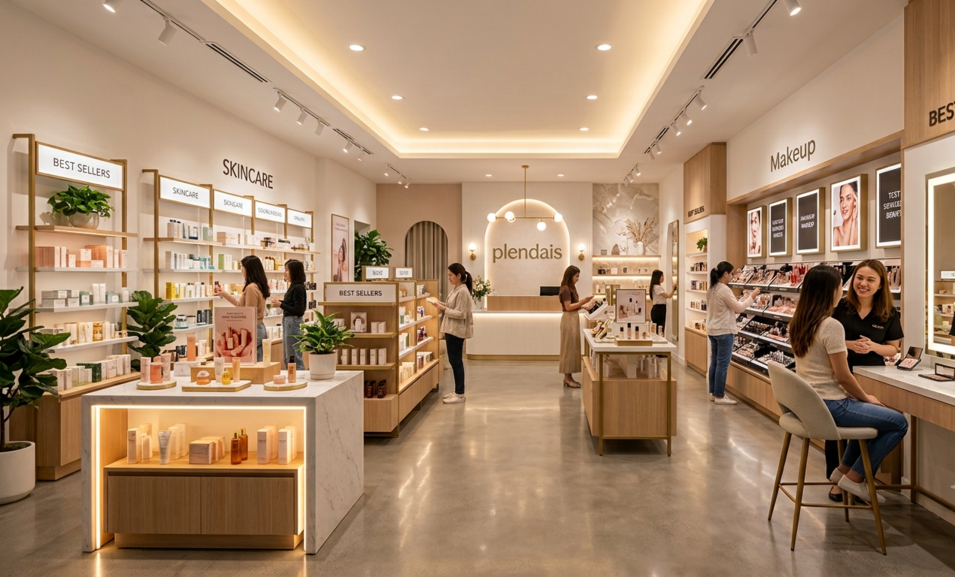
Cosmetic Store Design -Design Ideas
A sales-boosting retail store ambiance is one of the most influential factors shaping customer behavior and directly impacting purchasing decisions.
In today’s highly competitive retail industry, success depends not only on offering quality products but also on delivering a memorable shopping experience.
At the heart of this experience lies the harmonious integration of lighting, color selection, store layout, product display systems, music, scent, and decorative elements.
From an interior design perspective, a well-designed store ambiance combines aesthetics with functionality, strengthening brand identity while encouraging customers to spend more time in the store.
A carefully planned retail atmosphere enhances product presentation, increases customer satisfaction, fosters brand loyalty, and creates a significant competitive advantage that contributes directly to higher sales performance.
The Role of Store Design in
Interior Architecture
As competition in the retail industry continues to intensify, stores have evolved from simple places where products are sold into immersive environments where customers establish their first physical connection with a brand.
For this reason, retail store design has become one of the most significant fields within interior architecture.
A successful store design goes beyond creating an aesthetically pleasing environment; it aims to facilitate customer movement, improve product interaction, and positively influence purchasing decisions.
Interior architects carefully plan every physical component of the space by considering customer behavior, transforming stores into environments that are both functional and commercially successful.
Store Ambiance and
Customer Experience
The first impression customers develop within the first few seconds of entering a store often determines their shopping behavior. The key factor behind this impression is the retail store ambiance.
Store ambiance consists of lighting, colors, sound, scent, temperature, material selection, decoration, and even the contribution of store personnel, all working together to create a unified atmosphere.
A well-designed ambiance encourages customers to spend more time inside the store. Research consistently shows that longer visit durations increase product exposure, ultimately leading to higher sales.
Therefore, ambiance is not merely an aesthetic element—it is an essential component of an effective retail strategy.
Creating a
Sales-Boosting Retail Store Ambiance
In retail design, a successful ambiance is never accidental.
Every design element is strategically planned. The entrance should be open, welcoming, and inviting, while circulation paths should naturally guide customers through every section of the store.
Promotional products should be positioned in highly visible locations, whereas high-margin products should be placed along customers’ natural walking paths.
This strategic planning allows customers to discover more products, explore different categories, and make additional impulse purchases.
In interior architecture, this represents the successful integration of environmental psychology and commercial strategy.
The Impact of
Lighting Design on Sales
Lighting is one of the most powerful tools in retail store design. It does much more than illuminate a space—it changes how customers perceive products.
Warm lighting creates a welcoming and comfortable atmosphere, whereas cooler white lighting communicates modernity and innovation.
Accent lighting is especially effective in highlighting premium products such as jewelry, cosmetics, and electronics by increasing their perceived value.
Similarly, dramatic window lighting captures the attention of passersby and encourages store visits. Interior designers carefully balance ambient and accent lighting to create spaces that are both visually appealing and commercially effective.
The Psychological Power of
Colors and Materials
Colors serve purposes far beyond decoration; they significantly influence customer psychology.
Light colors create a feeling of openness and spaciousness, while darker tones often convey luxury and exclusivity.
Natural wood finishes evoke warmth and authenticity, whereas glass and metal surfaces communicate sophistication and technological advancement.
When colors align with a brand’s identity, customers are more likely to recognize and remember the brand.
From an interior architecture perspective, selecting appropriate colors and materials is fundamental to building a store environment that resonates with its target audience.
Music, Scent, and
Sensory Design
Successful retail environments stimulate more than just visual perception—they engage multiple senses.
Background music can influence shopping pace. Slower music often encourages customers to browse longer, while faster rhythms can increase movement throughout the store.
Likewise, a subtle signature scent strengthens brand recognition and improves memory retention.
Scent marketing has become particularly valuable in fashion, cosmetics, and lifestyle retail. Within interior architecture, this holistic approach is known as sensory design, creating stronger emotional connections between customers and brands.
Store Layout and
Customer Circulation
Efficient circulation planning forms the foundation of every successful retail environment.
Customers should be able to move comfortably, access products easily, and navigate the store without confusion.
Primary circulation paths should remain spacious, while secondary aisles should provide sufficient room for product browsing.
Interior architects analyze customer movement patterns to develop layouts that maximize both convenience and commercial effectiveness.
Retail Shelving Systems and
Functional Product Displays
Retail shelving is among the most essential components of product presentation.
However, shelving systems do far more than provide storage—they directly influence sales performance.
Shelf heights should remain within comfortable reach, while best-selling products are typically positioned at eye level to maximize visibility.
Shelf depth, structural capacity, and modularity should all be selected according to product variety.
Well-organized shelving systems make browsing easier and significantly increase purchase likelihood.
Gondola Displays and
Flexible Merchandising
Gondola shelving remains one of the most versatile fixtures in modern retail design.
Because both sides can display merchandise, gondolas maximize product presentation capacity while allowing flexible floor planning.
Their mobility enables retailers to quickly reorganize store layouts for seasonal collections, promotional campaigns, or changing merchandising strategies.
Proper gondola height also preserves clear sightlines across the sales floor, making the shopping environment feel more open and inviting.
Clothing Racks and
Fashion Presentation
In fashion retail, clothing racks preserve garment form while creating organized product displays.
More than simple fixtures, racks contribute significantly to the store’s visual identity.
Whether manufactured from wood, metal, or glass, they should complement the overall brand concept.
Organizing garments by color, size, or collection enables customers to locate products more efficiently, while adequate spacing between fixtures enhances shopping comfort.
Product Presentation and
Visual Merchandising
Successful retailers do not simply arrange products—they compose visual stories.
This practice is known as visual merchandising.
By varying display heights, creating color harmony, and establishing visual focal points, retailers effectively guide customer attention.
Displaying new arrivals alongside complementary products also encourages cross-selling opportunities.
Strong visual merchandising elevates both perceived professionalism and brand value.
Window Display Design and
First Impressions
The storefront window is often a customer’s first interaction with a retail brand.
A compelling window display encourages passersby to enter the store.
Rather than overcrowding the display, designers should develop a clear visual theme supported by lighting, graphics, mannequins, and balanced color composition.
Regular updates reflecting seasonal campaigns and special events keep storefronts dynamic and engaging.
Unique and Thematic
Retail Store Ambiance Design
Modern consumers increasingly seek memorable experiences rather than simple transactions.
Consequently, thematic and concept-driven retail environments have become increasingly valuable.
Nature-inspired interiors, industrial aesthetics, minimalist concepts, and culturally themed environments all create distinctive brand experiences.
Themes should extend consistently across lighting, materials, furniture, graphics, and decorative elements to establish a memorable identity that differentiates the brand from competitors.
Technology-Enhanced
Retail Environments
Digital displays, interactive kiosks, smart mirrors, and electronic shelf labels have become integral components of contemporary retail environments.
Technology provides customers with instant information while reinforcing a store’s innovative image.
Interior architects seamlessly integrate technological solutions into the overall design, ensuring visual harmony throughout the space.
These systems also simplify store operations and allow promotional updates to be implemented efficiently.
Sustainable
Retail Store Ambiance Design
Growing environmental awareness has made sustainability a central principle in retail interior design.
Recyclable materials, energy-efficient LED lighting, natural ventilation strategies, and durable modular furniture all contribute to environmentally responsible retail environments.
Beyond reducing operational costs, sustainable design strengthens a company’s environmentally conscious brand image.
Personnel as Part of
the Spatial Experience
Although physical design establishes the shopping environment, employees complete the customer experience.
Professional, knowledgeable, and welcoming staff reinforce the atmosphere created through interior design.
Well-planned cashier stations, storage areas, and employee facilities also contribute to operational efficiency.
Functional staff spaces ultimately improve service quality, resulting in higher customer satisfaction.
Conclusion: A Holistic Approach to
Retail Store Design
From an interior architecture perspective, retail store design represents a multidisciplinary process combining aesthetics, functionality, psychology, and commercial strategy.
When store ambiance, product presentation, shelving systems, gondola fixtures, clothing racks, window displays, and thematic concepts work together harmoniously, they create unforgettable shopping experiences.
Thoughtfully planned lighting, color palettes, music, scent, and circulation patterns encourage customers to remain longer, improve product visibility, and positively influence purchasing behavior.
Ultimately, successful retail design is far more than creating an attractive interior. It is a comprehensive interior architecture solution that expresses brand identity, shapes customer behavior, and supports long-term business performance.
Aydın Yıldız
Brand Consultant