

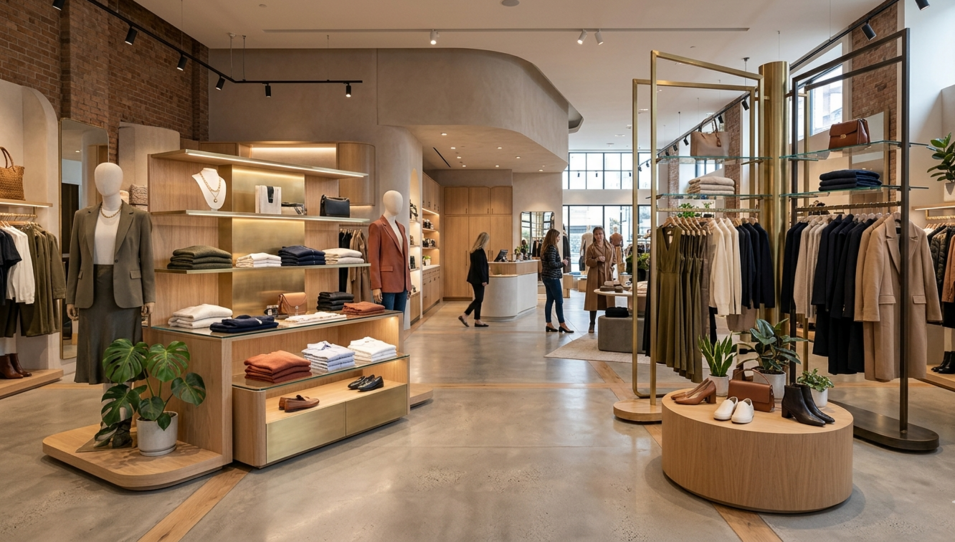
Product display shelving is among the most essential retail fixtures, enabling products to be presented in an organized, accessible, and visually appealing manner within a store.
Systems such as product shelves, sales shelving, and retail shelving serve different purposes while enhancing both product visibility and the overall customer shopping experience.
With well-planned product display shelving, stores can improve sales performance while creating a more professional and attractive retail environment.
Product Display Shelving and
Modern Merchandising Solutions
In today’s retail sector, product display shelving serves not only as a storage solution but also as an effective marketing tool.
Display shelves, supermarket shelving, showcase shelves, and merchandising units help highlight products, support promotional campaigns, and strengthen brand perception.
Designed to meet the needs of various industries, these systems contribute to the efficient use of retail space while directing customer attention toward the right products.
Functional Store Design with Product Display Shelving
Product display shelving plays a critical role in creating store sections and optimizing sales areas.
Solutions such as gondola shelving systems, department shelves, and display stand systems allow different product categories to be presented in an organized manner while improving the management of customer traffic throughout the store.
Combining aesthetics with functionality, product display shelving is one of the fundamental elements of modern retailing, enhancing customer satisfaction while supporting sales performance.
Transforming Store Design into a Strategic Spatial Language
Today, store design is no longer simply about creating a space for displaying products. It has evolved into a holistic experience design that integrates a brand’s identity into the physical environment.
From an interior architecture perspective, this process is considered a strategic tool that guides user behavior, shapes perception, and directly influences sales performance.
In this context, concepts such as experiential spatial design and consumer behavior-driven design have become increasingly important.
Modular and functional systems such as Cenart Store Shelving form the backbone of this approach by offering both aesthetic and practical solutions. The store is no longer merely a point of sale—it has become a stage where the brand’s story is brought to life.
Spatial Identity: Building the Brand’s Visual Memory
The first step in store design from an interior architecture perspective is creating a unique spatial identity for the brand. This identity emerges through the harmonious integration of all design elements, from color palettes and material selection to lighting and shelving systems.
At this stage, brand identity integration and spatial storytelling play critical roles.
With its adaptable structure suitable for different concepts, Cenart Store Shelving serves as an important tool in supporting this identity. Shelving systems are not only product carriers but also design elements that reinforce the brand’s visual memory.
Functionality and Ergonomics: Designing Around the User Experience
A successful store design relies not only on aesthetics but also on functionality.
Customers should be able to move comfortably throughout the space, access products easily, and follow a guided circulation path.
This is where ergonomic space planning and user-friendly circulation design become essential.
Cenart Store Shelving supports this ergonomic structure through various height and modular options. It maximizes display capacity in compact spaces while creating an organized visual rhythm in larger retail environments.
The Power of Modular Design: Flexibility and Adaptability
Change is inevitable in modern retail. Seasonal collections, promotional campaigns, and expanding product ranges require store layouts to be updated continuously.
For this reason, modular systems have become increasingly valuable.
Modular shelving systems and flexible spatial planning are among the cornerstones of contemporary retail design.
Cenart Store Shelving provides this flexibility, allowing store owners to quickly reorganize their spaces. As a result, the design evolves from a static structure into a dynamic and adaptable system.
Lighting and Product Emphasis: Managing Visual Perception
Lighting is one of the most influential factors affecting how products are perceived within a retail environment.
Proper lighting highlights a product’s texture, color, and quality.
In this context, accent lighting strategies and visual focal point creation are key design considerations.
Integrated lighting solutions combined with Cenart Store Shelving do more than simply illuminate products—they transform them into focal points. Shelving systems with LED integration, in particular, help create a powerful atmosphere in modern retail spaces.
Material Selection: Shaping the Sensory Experience
In interior architecture, material selection is not only an aesthetic decision but also a tool for creating emotional engagement.
The combination of wood, metal, glass, and composite surfaces defines the character of a retail environment.
Concepts such as sensory design approaches and material identity play an important role in this process.
Cenart Store Shelving offers a variety of material options that can adapt to different store concepts, giving spaces either a contemporary or warm character. This flexibility enables brands to create atmospheres tailored to their target audiences.
Spatial Flow: Guiding Consumer Behavior
Customer movement within a store is never entirely random. Through a carefully designed circulation plan, visitors are guided along specific routes.
This represents the spatial expression of a sales strategy.
Spatial wayfinding strategies and sales-oriented circulation planning form the foundation of this approach.
By enabling strategic product placement, Cenart Store Shelving draws customer attention to key areas and optimizes the shopping experience. This method increases both the sense of discovery and overall sales potential.
Minimalism and Visual Clarity: A Focused Design Language
Simplicity has become increasingly important in contemporary retail design.
Rather than relying on complex visual elements, modern stores favor a design language that places products at the center of attention.
In this context, minimalist retail aesthetics and the principle of visual simplification stand out.
With its clean and organized structure, Cenart Store Shelving highlights products while eliminating unnecessary visual clutter. As a result, customer attention is directed straight to the merchandise.
Digital Integration: The Smart Retail Experience
Modern store designs are becoming increasingly integrated with digital technologies.
Digital displays, interactive surfaces, and intelligent shelving systems are transforming the shopping experience.
Smart retail solutions and digital-physical integration are at the heart of this transformation.
Cenart Store Shelving is designed to integrate seamlessly with digital systems, making it well-suited to the modern retail landscape. As a result, the store becomes not only a physical environment but also a digital experience platform.
Sustainability: The Future of Store Design
Sustainability has become a necessity rather than a choice in interior architecture.
Energy efficiency, recyclable materials, and long-lasting designs are now top priorities.
Within this framework, sustainable design practices and environmentally responsible material selection are of critical importance.
Thanks to its durable construction and long service life, Cenart Store Shelving contributes to sustainable retail design, offering a solution that is balanced both economically and environmentally.
Brand Experience: From Space to Storytelling
The ultimate goal of store design is to create a memorable experience for the customer.
This experience fosters an emotional connection between consumers and the brand.
Experience-driven retail design and emotional brand engagement are at the core of this process.
Cenart Store Shelving transforms product presentation from a simple visual arrangement into a storytelling medium. Every shelf becomes part of the brand’s narrative.
Conclusion: From Shelving Systems to Strategic Spatial Design
From an interior architecture perspective, store design is no longer merely a matter of physical organization—it is a strategic form of experience design.
Modular and flexible systems such as Cenart Store Shelving are among the most important tools driving this transformation.
Holistic spatial design and strategic retail architecture are key concepts shaping the future of retail environments.
A well-designed store is not simply a place that sells products; it becomes a living embodiment of the brand’s identity.
For this reason, store design continues to gain importance as one of the most dynamic and impactful disciplines within interior architecture.
Aydın Yıldız
Brand Consultant
For modern, aesthetic, functional, and comfortable design, project, and implementation solutions, let’s get in touch now for the best interior architecture design ideas, project quotations, and turnkey interior design solutions.