

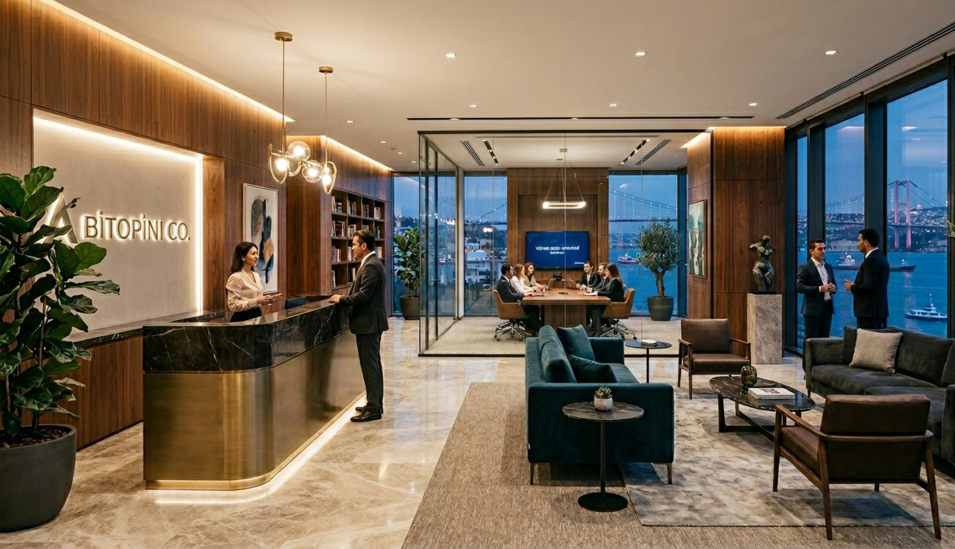
Corporate culture design is a strategic design approach that makes a company’s values, working philosophy, and brand identity visible through physical spaces.
In today’s increasingly competitive business environment, companies strive to differentiate themselves not only through the services they offer but also through the corporate culture they create.
At this point, corporate culture design emerges as a key element that enhances employee experience, strengthens brand identity, and translates an organization’s core values into physical environments.
Particularly in office design, colors, materials, spatial organization, and social areas directly reflect a company’s vision and workplace culture.
From an interior architecture perspective, corporate culture design is not merely an aesthetic arrangement; it is a comprehensive experience design process that fosters a sense of belonging, supports productivity, and reinforces organizational identity.
The Power of Corporate Culture
Reflected in Space
Today, offices have evolved beyond physical environments where employees simply perform their duties. They have become important experience centers that communicate a company’s identity and values.
A company’s corporate culture influences everything from employee behavior and communication styles to business practices and brand perception.
From an interior design standpoint, translating this culture into physical space is essential for strengthening employee engagement and brand value.
A successful office design does more than provide visual appeal; it makes the organization’s character visible and helps users establish a meaningful connection with the environment.
Creating Identity and
Belonging Through Office Design
One of the primary objectives of interior architecture is to create emotional connections between users and spaces. In corporate offices, this connection is directly linked to employee loyalty and engagement.
During the design process, the company’s vision, mission, and values are analyzed to guide spatial decisions.
To help employees feel like an integral part of the organization, a sense of belonging can be reinforced through various design elements, from spatial organization to material selections.
Graphic applications, brand colors, wall installations that tell the company’s story, and shared social spaces all contribute to strengthening this sense of belonging.
The Relationship Between Spatial Language and
Brand Identity
Every brand possesses a unique language. This language should be experienced not only through logos and advertising but also within physical environments.
In interior architecture, this approach can be described as spatial brand identity.
The office of an innovative technology company cannot be designed with the same approach as that of a long-established law firm.
Technology companies often favor flexible, creative, and dynamic spaces, while more traditional corporate organizations may emphasize professionalism and authority.
When design aligns with brand identity, it creates a strong first impression for visitors while helping employees better embrace the organization’s values.
The Impact of Open Office Layouts on
Corporate Culture
The growing popularity of open-office concepts reflects a design approach aimed at increasing collaboration and communication among teams.
These layouts seek to reduce hierarchy and encourage interaction between employees.
However, open-office design is not suitable for every organization. Spaces planned according to the specific requirements of corporate culture tend to achieve more successful outcomes.
While open-plan environments can improve productivity in collaboration-focused companies, industries requiring high levels of concentration may benefit from additional private workspaces.
For this reason, design decisions in interior architecture should always be closely aligned with organizational culture.
The Role of Flexibility in
Next-Generation Offices
The rise of modern work models has significantly transformed office design through the concept of flexible working.
Today, employees are no longer limited to fixed desks; they can work in various environments tailored to different work scenarios.
To accommodate this shift, interior architects increasingly design modular furniture systems, multifunctional meeting areas, and adaptable spaces.
Flexible designs provide employees with a sense of freedom while physically expressing the organization’s innovative mindset.
The Influence of Color on
Corporate Identity
Color is one of the most powerful tools influencing how users perceive a space.
In offices designed to reflect corporate culture, color choices serve purposes beyond aesthetics; they also communicate brand personality.
Colors associated with trust and professionalism are frequently used in the financial sector, while vibrant tones that encourage creativity are often preferred in advertising and design agencies.
Strategic use of brand colors allows employees to experience the company’s identity in their daily environment, transforming design into a communication tool that makes intangible values visible.
The Story Told Through
Material Selection
Materials play a crucial role in designs that support corporate culture.
Wood surfaces can create feelings of warmth and authenticity, while metal and glass details often convey innovation, technology, and modernity.
For organizations focused on sustainability, the use of recycled materials can visibly reflect environmental responsibility.
In interior architecture, material selection is not merely a visual decision but also a powerful narrative tool that communicates corporate values.
The Importance of Social Spaces in
Corporate Culture
Successful offices are not composed solely of workstations.
Social spaces where employees can gather and interact play a significant role in developing corporate culture.
Lounges, communal kitchens, game areas, and event spaces encourage communication and collaboration among employees.
From an interior design perspective, these areas are essential components that strengthen team spirit.
Well-designed social spaces enhance employee satisfaction while demonstrating a company’s people-centered approach.
Enhancing Workplace Experience Through
Lighting Design
Lighting is one of the most influential factors affecting employee performance.
Maximizing natural daylight contributes significantly to both physical and psychological well-being.
Artificial lighting systems should be carefully designed to support different work scenarios.
A well-planned lighting strategy not only improves productivity but also reinforces a company’s professional image and overall quality perception.
In visitor-facing areas, lighting design can have a particularly strong impact on brand perception.
Expressing Transparency and
Trust Through Space
Organizations that prioritize transparency and trust within their corporate culture can reflect these values through spatial design.
Glass partitions, open sightlines, and accessible executive offices create a more democratic and inclusive workplace environment.
These design solutions are not simply aesthetic choices; they are tangible expressions of an organization’s values.
Transparent environments help employees feel more connected to leadership and the decision-making process.
Technology and
Digital Integration
In the era of digital transformation, office environments are increasingly designed around integrated technological infrastructure.
Smart meeting systems, room-booking technologies, interactive displays, and hybrid-work solutions have become essential components of modern workplace culture.
From an interior architecture perspective, technology is not merely a technical requirement but also an important element that enhances user experience.
Whether visible or seamlessly integrated, technology serves as an effective tool for expressing a company’s innovative identity.
The Corporate Value of
Sustainable Office Design
Today, many organizations consider environmental responsibility a fundamental component of their corporate culture.
This philosophy is reflected in the workplace through sustainable design practices.
Energy-efficient systems, natural ventilation strategies, recyclable materials, and green certification standards have become essential features of contemporary offices.
Sustainable designs not only provide environmental benefits but also strengthen an organization’s commitment to social responsibility.
Biophilic Design and
Human-Centered Approaches
Biophilic design, which seeks to strengthen connections with nature, has become increasingly popular in corporate workplaces.
Plants, natural materials, daylight, and organic forms help reduce stress levels while improving overall employee well-being.
For organizations embracing human-centered design principles, biophilic solutions offer a powerful tool.
These environments support both physical and mental health, creating more productive and engaging workplaces.
The Role of Reception Areas in
Brand Representation
A visitor’s first physical interaction with a company usually takes place in the reception area.
As a result, entrance spaces are among the most influential environments for communicating corporate identity.
Materials, lighting details, furniture selections, and graphic elements all contribute directly to brand perception.
A well-designed reception area can immediately communicate a company’s professionalism, vision, and values.
From an interior architecture perspective, these spaces can be viewed as three-dimensional representations of a brand.
Employee
Experience-Centered Design
While traditional office design focused primarily on operational efficiency, contemporary workplaces increasingly prioritize employee experience.
Designs that understand and respond to employee needs tend to deliver more successful outcomes.
Ergonomic workstations, quiet rooms, creativity-enhancing spaces, and social areas all contribute to employee satisfaction.
This approach also helps organizations attract and retain talented professionals in an increasingly competitive labor market.
Conclusion: Offices as Spatial Expressions of
Corporate Culture
Cenart Architecture creates a difference by transforming companies’ values, visions, and brand identities into powerful spatial experiences through its office concepts and corporate culture design approach.
From an interior architecture perspective, offices are far more than places where business activities occur.
They are powerful communication tools that express an organization’s identity, values, and future vision.
A successful office design inspires employees, strengthens brand perception, and integrates corporate culture into everyday experiences.
From colors and materials to lighting and spatial organization, every design decision should be viewed as an opportunity to communicate the organization’s character.
For this reason, contemporary interior architecture is not merely an aesthetic discipline but a strategic design approach that makes corporate culture visible and tangible.
Aydın Yıldız
Brand Consultant
For modern, aesthetic, functional, and comfortable design, project, and implementation solutions, let’s get in touch now for the best interior architecture design ideas, project quotations, and turnkey interior design solutions.