

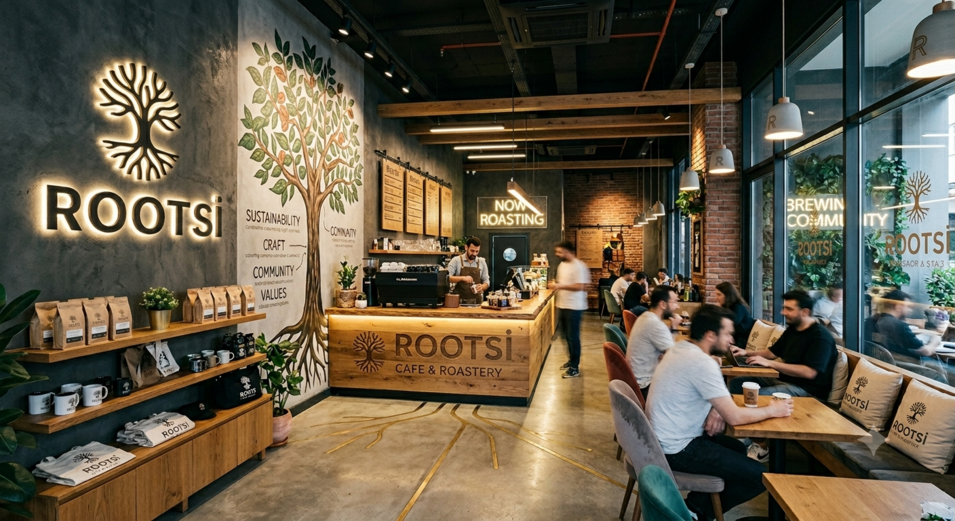
Brand communication has become one of the most critical factors in helping brands establish meaningful and lasting connections with their target audiences in today’s rapidly evolving digital landscape. While digital channels continue to expand, the importance of physical experiences in shaping brand perception and customer engagement continues to grow.
At this point, brand communication and spatial design emerge as two complementary strategic elements. A brand’s values, vision, and corporate identity are communicated not only through advertising efforts but also through the physical spaces that users directly experience.
Stores, offices, showrooms, hotels, and social spaces have become communication platforms that reflect a brand’s character and leave lasting impressions on visitors.
Through well-planned interior architectural solutions, spaces evolve beyond functional environments into experience centers that tell a brand story, establish emotional connections, and strengthen brand value.
For this reason, in today’s competitive environment, addressing brand communication and spatial design through a holistic approach is considered one of the fundamental components of sustainable brand success.
Brand communication extends far beyond traditional advertising and marketing activities, influencing every interaction between a brand and its audience.
The Strategic Role of Physical Spaces in
Brand Communication
Today, brands compete not only through the products and services they offer but also through the experiences they create for their audiences.
Although some believe that the rise of the digital world has diminished the importance of physical environments, the opposite is true. Physical spaces where brands can directly engage with consumers have become more critical than ever.
A store, hotel, restaurant, office, or showroom serves as a powerful communication tool that conveys a brand’s values, vision, and identity to visitors.
Therefore, within the framework of brand communication, physical spaces are regarded not merely as functional environments but as three-dimensional platforms that tell the brand’s story.
The discipline of interior architecture transforms a brand’s abstract values into tangible spatial experiences, creating lasting impressions on visitors. People want not only to see a brand but also to feel it.
The atmosphere of a space, the materials used, color schemes, lighting design, and circulation planning directly influence how visitors perceive a brand.
As a result, physical spaces are among the most powerful tools for building emotional connections between brands and their audiences.
Effective brand communication helps organizations create a consistent identity across both digital and physical touchpoints. In contemporary interior architecture, brand communication is increasingly expressed through spatial experiences that reflect a company’s values and vision.
The Strong Relationship Between
Interior Architecture and Brand Identity
Every brand possesses a unique identity shaped by its values, goals, corporate culture, and target audience expectations. However, effectively communicating that identity requires more than logos, slogans, or advertising campaigns. The translation of brand identity into physical space is equally important.
This is where the concept of brand-oriented interior design becomes significant. In this approach, interior architects analyze a brand’s character and transform its defining qualities into spatial elements.
For example, a store designed for an innovative technology brand will differ greatly from one created for a brand emphasizing tradition and heritage. From material selection to lighting solutions, every element is carefully aligned with the brand identity.
This consistency enables visitors to understand the brand more clearly while also fostering brand loyalty. Therefore, interior architecture is not merely an aesthetic endeavor but also a strategic brand management tool.
Well-designed environments strengthen brand communication by creating memorable experiences that resonate with visitors on an emotional level.
The Impact of Spatial Experience on
Consumer Perception
Today’s consumers seek more than products; they seek experiences. As a result, creating experience-driven environments has become increasingly important for brands.
Every interaction a visitor has with a space—from entering to leaving—forms part of the overall brand experience.
Successful interior design enables visitors to navigate comfortably, feel valued, and develop positive emotional connections with the brand. Spaces created through an impactful design approach leave strong impressions in visitors’ memories.
People often remember experiences more vividly than the products they purchase. Therefore, spatial experience has become one of the most powerful components of brand communication.
Sensory design elements also play an important role in this process. Visual impressions, acoustics, material textures, and even ambient scents can influence consumer perception and enrich the overall brand experience.
The Importance of Interior Designs That
Add Value to Spaces
One of the most significant factors that increase the economic, social, and cultural value of a space is high-quality interior architecture.
Interior design is not simply about organizing empty areas; it is about creating meaningful environments that offer memorable experiences.
Designs that enhance the value of spaces combine aesthetics and functionality to improve user satisfaction. Well-designed environments attract more visitors, encourage longer stays, and create positive perceptions of the brand.
In commercial settings, these benefits often translate directly into financial gains.
For example, strategically positioned product displays can increase sales performance, while carefully planned circulation areas help visitors use the space more efficiently. In this way, interior architecture becomes a strategic investment that enhances not only visual quality but also business performance.
Through strategic spatial planning, materials, lighting, and visual elements, brand communication becomes a tangible experience rather than simply a verbal message.
The Power of Spatial Design in
Brand Management
For modern businesses, brand management extends far beyond advertising and marketing activities. It encompasses every touchpoint through which consumers interact with the brand.
Physical spaces are among the most influential of these touchpoints.
A well-designed environment can strengthen a brand’s credibility and professionalism. Visitors often form conscious or subconscious judgments about quality based on the physical environment.
Neglected, disorganized, or brand-inconsistent spaces create negative impressions, whereas aesthetic, functional, and cohesive designs elevate brand value.
For this reason, interior architects and brand managers increasingly collaborate to develop spatial strategies. As a result, brand messages can be communicated not only through visual media but also through the spaces themselves.
The Cenart Approach and
Experienced Interior Architecture
Today, experienced interior architecture firms do more than create aesthetically pleasing environments; they develop spatial strategies that enhance brand value.
In this context, approaches such as Cenart, which embrace professional interior architecture practices, integrate spatial design with brand communication.
An experienced interior design process begins by analyzing the brand’s target audience, market position, corporate values, and user expectations. Based on these insights, every component of the space is carefully designed and refined.
The result is an environment that is not only visually successful but also aligned with brand strategy while delivering an exceptional user experience.
This approach is particularly valuable in corporate offices, retail stores, hotels, and commercial environments, where it helps strengthen a brand’s competitive advantage.
The Influence of Space in
Building Emotional Connections
One of the most valuable goals for any brand is establishing emotional connections with consumers. Customers who feel emotionally connected are more likely to remain loyal over time.
Physical spaces play a crucial role in creating these connections.
People associate memories with places, and these memories often become linked to brands. A welcoming reception area, a comfortable waiting space, or an inspiring retail atmosphere can generate positive emotions toward a brand.
Interior architecture addresses not only functional requirements but also the psychological expectations of users.
As a result, many successful brand experiences emerge from thoughtfully designed environments. The emotional impact created by a space can often surpass the influence of traditional advertising campaigns.
Sustainable
Design and Brand Value
In recent years, sustainability has become an essential component of brand communication. Consumers increasingly prefer brands that demonstrate environmental responsibility.
Consequently, sustainable design principles have gained greater importance in interior architecture projects.
Energy-efficient systems, recyclable materials, natural lighting strategies, and environmentally responsible applications contribute positively to brand image.
In this way, spaces create value not only through aesthetics and functionality but also through environmental responsibility.
Sustainable interior designs help make a brand’s social responsibility efforts visible while providing long-term economic benefits. This contributes to stronger brand value and increased consumer trust.
Impactful Designs That
Create Competitive Advantage
In many industries today, products and services have become increasingly similar. As a result, brands must find new ways to differentiate themselves.
Interior architecture is one of the most powerful tools for achieving this distinction.
Spaces created through a unique and impactful design approach help brands stand out from competitors. In the age of social media, visually striking environments are frequently shared by users, increasing brand visibility and engagement.
The visual experiences offered by design also support a brand’s digital presence and reach.
For this reason, investments in interior architecture are now viewed not only as physical development projects but also as strategic marketing and communication investments.
The Future Role of
Interior Architecture in Brand Experiences
Technological advancements and evolving consumer expectations continue to increase the importance of interior architecture within brand communication.
Smart environments, digital interaction systems, augmented reality applications, and personalized experiences are shaping the future of branded spaces.
However, regardless of technological progress, people will continue to value physical experiences. The strongest relationships with brands are often formed through real-world interactions and environments.
For this reason, interior architecture will remain at the center of brand communication strategies in the years ahead.
Conclusion
As consumer expectations continue to evolve, successful brand communication relies on the seamless integration of design, experience, and storytelling.
Physical spaces are no longer merely functional environments; they are strategic communication platforms where brands connect their identities, values, and stories with users.
Interior architecture serves as one of the most important vehicles for this communication.
When concepts such as brand communication, brand management, brand-oriented interior design, space-enhancing design, and impactful design are considered together, it becomes clear that successful spaces play a decisive role in brand success.
Approaches such as Cenart, which embrace experienced interior architecture practices, transform physical environments into powerful experience centers that enhance both customer satisfaction and brand value.
Ultimately, interior designs that add value to spaces are not simply aesthetic investments; they are strategic investments that strengthen brand perception, create competitive advantages, and support long-term success.
Aydın Yıldız
Brand Consultant
For modern, aesthetic, functional, and comfortable design, project, and implementation solutions, let’s get in touch now for the best interior architecture design ideas, project quotations, and turnkey interior design solutions.