

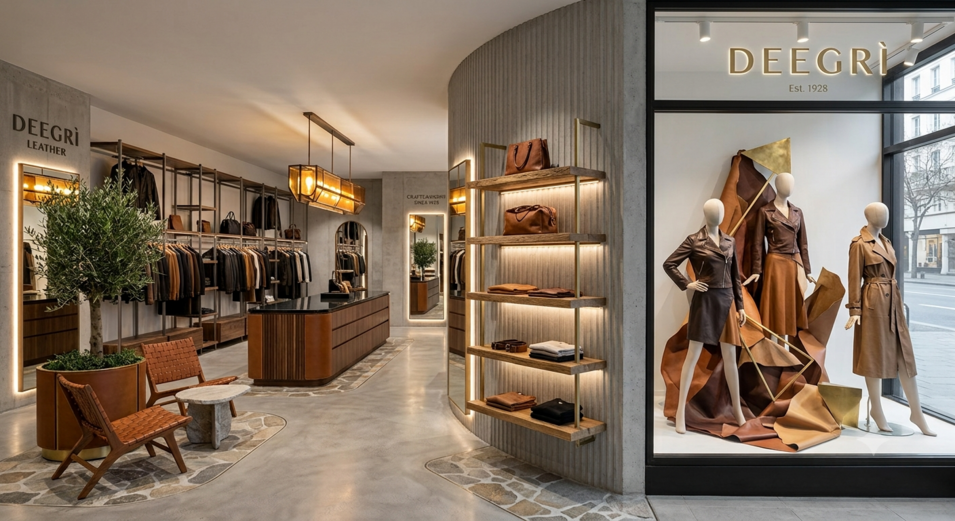
“Leather apparel store design from an interior architecture perspective” is a specialized design approach that combines aesthetic values, functional requirements, and brand identity.
Leather apparel products stand out with their perception of quality, elegance, and durability; therefore, the store environment where these products are displayed should also support these values.
In a successful leather store design, presenting products in an impressive way, using the right lighting solutions, facilitating customer circulation, selecting luxurious materials, and creating a strong visual atmosphere are of great importance.
Through interior architectural solutions, a store transforms from merely a shopping space into an experiential environment where customers can feel the character of the brand.
For this reason, every detail in leather apparel stores — from window displays and product placement to ceiling lighting and accessory presentation areas — should be planned to increase sales performance and build customer loyalty.
The Importance of Interior Architecture in
Leather Apparel Store Design
A “leather apparel store” is not simply a retail area where products are displayed. It is also a powerful experience space that reflects the brand identity, builds customer trust, and directly influences purchasing decisions.
From an interior architecture perspective, store design requires the harmonious integration of many elements, including spatial organization, material selection, lighting, color balance, and product presentation.
For product groups with a premium perception such as leather, the store atmosphere is as important as product quality.
From the moment customers enter the store, they should perceive a sense of quality and encounter a carefully designed visual language in every detail of the space.
Therefore, a successful leather store design requires a professional interior architectural approach that balances aesthetics and functionality.
How Should an Impressive Product Layout
Be Planned in a Leather Store?
A successful “impressive product layout in a leather store” should be planned to create a natural circulation route for customers within the space.
The entrance area should feature the most eye-catching leather jackets, coats, and seasonal collection pieces.
This area represents one of the strongest sales points of the store. Products should be displayed in a way that prevents visual competition between items, sufficient circulation space should be maintained between display units, and different product categories should be visually separated to improve the shopping experience.
From an interior architecture perspective, product placement is not only an aesthetic decision but also a psychological sales strategy.
Since human vision naturally focuses on open spaces and strong focal points, attention-grabbing products should be positioned strategically.
The Leather Product Display Window
Defines the First Impression
One of the most important marketing areas of any store is the “leather product display window” design. The storefront communicates the brand image even to customers who do not enter the store.
Since leather products represent premium and timeless qualities, simple yet powerful compositions should be preferred in window design.
Using a limited number of impactful products, high-quality mannequins, natural wood details, metal surfaces, and specialized lighting enhances the perceived value of leather products. The color palette of the display window should generally consist of black, anthracite, dark brown, and natural leather tones.
Instead of unnecessary visual clutter, a strong storytelling approach in window design can increase customer interest and encourage store visits.
Store Center
Display Shelves Are the Core of Sales
In interior design, “store center display shelves” are among the most active sales areas of a retail space. Since customers spend a significant amount of time in this area, the best-selling products should be displayed here.
Shelf heights should be designed according to ergonomic dimensions that allow customers to easily access products. Center display units combining wood, black metal, and natural stone details create both a modern and luxurious appearance.
Leaving sufficient space between shelves allows customes to move comfortably while also contributing to a higher perception of product quality.
Special campaign products or new-season collections can also be placed in central areas to support sales performance.
Luxury Ceiling
Lighting Strengthens the Atmosphere of the Space
One of the most important design elements in a leather store is the “luxury ceiling lighting” system. High color-rendering LED lighting should be preferred to accurately reveal the natural texture and colors of leather surfaces.
In addition to general lighting, track spotlights, hidden LED lines, and decorative pendant lights can be used together. Creating focused lighting above product displays directs customers’ attention toward the merchandise.
Geometric ceiling lines, wooden panels, or metal details can add a prestigious character to the store. Besides balanced light distribution, shadow control is also essential. Incorrect lighting may cause leather products to appear in inaccurate colors.
Special Display Areas for
Other Leather Accessory Products
In a leather store, not only jackets and coats but also “other leather accessory products” significantly influence sales performance.
Items such as bags, belts, wallets, gloves, card holders, and key holders should be displayed in specially designed presentation units.
Different display heights can be used to create visual movement in these areas.
Organized presentation of small products demonstrates store discipline and allows customers to examine products more easily.
Accessory areas positioned near the checkout counter are commercially valuable because they encourage impulse purchases.
Naturalness and
Premium Perception in Material Selection
Materials used in stores displaying leather products should be compatible with the character of the products.
Natural wood finishes, matte black metal details, bronze accents, natural stone surfaces, and high-quality glass panels create a sophisticated store atmosphere.
From an interior architecture perspective, material selection should be evaluated not only aesthetically but also in terms of durability.
Floor finishes resistant to heavy customer traffic should be preferred, while long-lasting materials should be used for display units.
This allows the store to maintain its quality appearance for many years.
Creating a Strong
Brand Identity Through Color Palette
Color selection in leather stores directly influences customers’ psychological perception.
Black, dark brown, taupe, charcoal, and anthracite tones complement the natural character of leather products.
Light-colored walls highlight products, while darker tones strengthen the feeling of luxury.
Interior designers generally create balanced environments by using neutral colors as a foundation and allowing the products’ own colors to stand out.
Controlled use of color transitions creates visual harmony throughout the store and directs customer attention toward the products.
Product Visual Presentation That
Increases Sales in Stores
“Product visual presentation that increases sales in stores” does not only mean making products look attractive.
Visual hierarchy, lighting, product grouping, and display techniques should be evaluated together.
Displaying products from the same collection together helps customers create combinations more easily. Mannequins styled with realistic lifestyle combinations demonstrate the possible usage scenarios of products more clearly.
Regularly updated visual arrangements keep the store dynamic and engaging.
As a result, returning customers experience something new during each visit.
Store Interior
Circulation Planning
In successful store design, circulation planning plays a crucial role.
The route from the entrance to the checkout should encourage customers to explore all sections of the store.
Aisle widths should allow comfortable movement, while blind spots should be minimized. Fitting rooms should be easily accessible, and waiting areas should be arranged comfortably.
An efficient circulation flow allows customers to see more products and increases the possibility of purchase.
Comfortable
Design of Fitting Rooms
Leather products are often purchased after being tried on. Therefore, fitting rooms are among the most critical areas of store design.
Proper lighting should be used in fitting rooms, and mirrors should be positioned to provide different viewing angles.
Seating areas, hangers, bag storage sections, and high-quality curtain or door systems increase customer satisfaction.
Spacious and comfortable fitting rooms allow customers to spend more time experiencing the product.
Strategic Positioning of the
Checkout Area
The checkout area is not only a payment point. It is also an important sales zone where the final customer interaction takes place.
Displaying small leather accessories around the checkout creates additional sales opportunities.
Natural stone, wood, and metal details should be preferred in checkout counter design to maintain consistency with the overall store concept.
Ergonomic arrangements that allow employees to work comfortably improve both operational efficiency and customer satisfaction.
The Contribution of
Digital Technologies to Store Design
Modern leather stores increasingly use digital screens, interactive catalogs, and smart lighting systems.
Digital screens can display collection presentations, campaigns, or videos explaining production processes.
This allows customers to understand not only the appearance of a product but also the quality story behind it.
Technology-supported interior solutions strengthen the contemporary identity of the store while enriching the shopping experience.
Sustainable
Interior Architecture Approach
Sustainability has become an important criterion in modern store design.
Using recyclable materials, energy-efficient LED systems, natural ventilation solutions, and environmentally responsible production processes strengthens brand image while reducing operational costs.
A sustainable design approach is also compatible with the leather industry’s perception of quality and longevity.
Conclusion
A leather apparel store designed from an interior architecture perspective should bring together aesthetics, functionality, and commercial success.
Professional solutions developed for “impressive leather store product placement,” “leather product display windows,” “store center display shelves,” “luxury ceiling lighting,” and “other leather accessory product groups” enhance brand value while strengthening customer experience.
When proper material selection, effective lighting, smooth circulation planning, and “product visual presentation that increases sales in stores” are evaluated together, the result is a store that is both visually powerful and commercially successful.
In today’s competitive environment, successful “store interior” design is not only about creating a beautiful space; it means developing a comprehensive interior architectural strategy that keeps customers engaged longer, creates emotional connections with products, and supports purchasing decisions.
Aydın Yıldız
Brand Consultant