

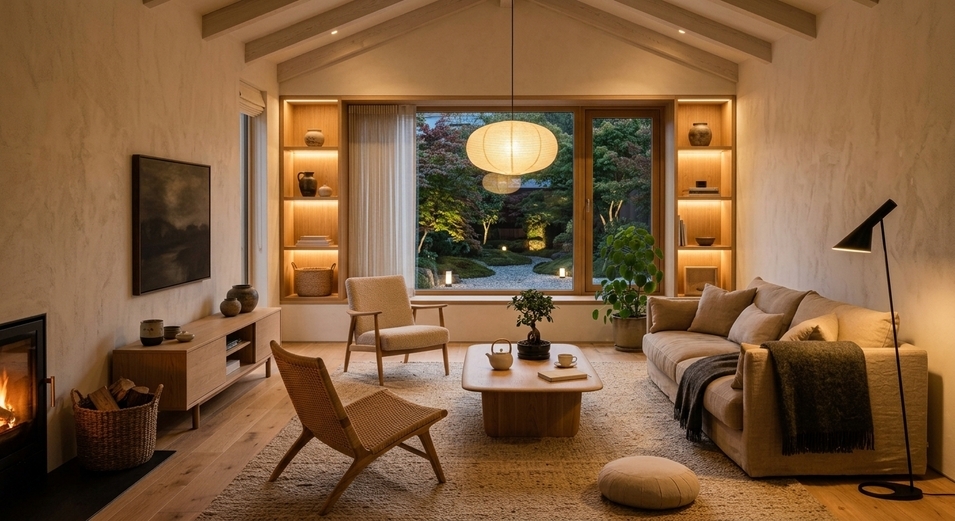
Japandi design is a modern interior style that combines the simplicity of Japanese aesthetics with the warm and functional approach of Scandinavian design.
This design philosophy prioritizes minimalism, natral materials, and timeless details, aiming to create calm and balanced living spaces.
Featuring wooden textures, neutral color palettes, clean lines, and high-quality craftsmanship, Japandi design is an ideal choice for users who value both aesthetics and functionality.
In recent years, this style has rapidly gained popularity in interior architecture and home decor, transforming the philosophy of simple living into modern spaces and creating airy, organized, and inviting environments.
The Emergence of
Japandi Design Philosophy
Japandi design is a contemporary interior approach that merges the shared values of Japanese aesthetic culture and Scandinavian design tradition.
It has been widely used in a variety of projects—from residential spaces to hotels, offices, and boutique commercial environments. Beyond being a visual style, it represents a holistic design philosophy aimed at improving quality of life.
From an interior architecture perspective, Japandi focuses on eliminating unnecessary elements, prioritizing user needs, and emphasizing natural materials.
This approach delivers not only simplicity in appearance but also functionality, creating serene, balanced, and timeless living environments.
The Balance of
Minimalism and Functionality
In interior architecture, successful design is not only about aesthetics but also about improving everyday usability. Japandi strongly reflects this principle.
Instead of excessive furniture, decorative objects, and complex design elements, it favors simple, functional, and durable pieces.
Every item has a purpose, and nothing is placed without intention.
As a result, users gain freedom of movement, and spaces feel larger, airier, and more organized. This approach is particularly effective in small living spaces.
The Contribution of
Japanese Aesthetics to Space
One of the core foundations of Japandi design is Japanese design culture, which emphasizes harmony with nature, simplicity, and tranquility.
Natural wooden surfaces, low-profile furniture, and clean geometric forms are essential components of this approach. Interior architects inspired by Japanese design aim to highlight the spirit of the space itself.
By avoiding unnecessary visual clutter, this philosophy helps users feel calmer and more at ease in their homes.
Empty space is also considered a design element; rather than filling every corner, breathing room is intentionally left to create balance.
The Warmth of
Scandinavian Design
Scandinavian design complements functionality with warm and welcoming living environments. Unlike strict minimalism, it prioritizes comfort, adding a friendly character to Japandi.
Light-colored woods, soft textiles, natural fabrics, and simple furniture help create a more inviting atmosphere.
Thanks to this approach, minimalist interiors feel less cold and more livable and user-friendly.
Natural Materials and
Timeless Design
Material selection is one of the most important elements in interior architecture. In Japandi design, natural materials are essential.
Solid wood, bamboo, natural stone, ceramics, linen, cotton, and wool provide both aesthetic and sustainable solutions.
These materials do not simply age—they gain character over time.
The natural grain of wood, the unique texture of stone, and the imperfections of handcrafted ceramics add authenticity to spaces, helping each project develop its own identity.
Color Palette and
Psychological Impact
One of the most distinctive features of Japandi design is its balanced and restrained color palette.
White, off-white, beige, light gray, sand tones, stone colors, and natural wood shades form the base.
These neutral tones can be balanced with black accents or dark brown details. From an interior architecture perspective, color is not only visual but also psychological.
Light tones make spaces feel larger, while natural colors create a calming effect.
This is why Japandi is especially preferred by those seeking peaceful interiors in busy urban environments.
The Importance of
Lighting
Proper lighting is one of the most critical tools in shaping interior atmosphere.
Japandi design prioritizes natural light as much as possible, using large windows, sheer linen curtains, and light-colored surfaces to maximize daylight.
For artificial lighting, warm color temperatures are preferred.
Pendant lamps, wooden wall sconces, and simple table lamps support the natural character of the space. Soft, diffused lighting contributes to a relaxing ambiance.
Furniture
Design Principles
Japandi furniture is characterized by clean lines and high-quality craftsmanship. Natural wood surfaces and ergonomic design are key elements.
Furniture is often lower to the ground, enhancing the sense of spaciousness. Modular and multifunctional pieces are also commonly used.
For example, a coffee table with storage or a bench with hidden compartments reflects the functional philosophy of Japandi design.
The Role of
“Negative Space” in Design
In modern interior architecture, empty space is not unused—it is an active design element in Japandi philosophy.
Instead of filling every surface with decorative objects, breathing space is intentionally created.
This helps users feel mentally relaxed while also allowing key design elements to stand out more clearly.
Removing excess contributes to a more organized and aesthetically pleasing environment.
Texture and
Material Diversity
Since color usage is limited in minimalist design, texture becomes especially important.
In Japandi interiors, linen curtains, wool rugs, natural stone surfaces, wooden furniture, and ceramic accessories create a harmonious variety of textures.
Even within similar color tones, different surface qualities add depth and richness without creating visual clutter.
Sustainability and
Eco-Friendly Design
Sustainable design is one of the core principles of modern interior architecture, and Japandi aligns strongly with this mindset.
The use of natural materials, long-lasting products, and reduced consumption supports environmental responsibility.
Instead of fast consumption, durable furniture is preferred, offering both economic and ecological benefits. Japandi is therefore not just a style but a conscious lifestyle choice.
Minimal Approach in
Decoration
Japandi decor emphasizes restraint. Instead of numerous objects, only a few meaningful, high-quality pieces are used.
Handcrafted ceramics, natural stone objects, simple artwork, and small indoor plants are commonly chosen.
Each item is carefully selected to contribute to visual balance and overall harmony.
Bringing Nature
Indoors with Plants
A strong connection with nature is fundamental to Japandi design, which is why indoor plants are frequently used.
Large-leaf plants, bonsai trees, and simple green arrangements bring natural energy into spaces.
Plants are not only decorative but also improve air quality, enhance color balance, and support psychological well-being.
Japandi in
Residential Projects
In residential design, Japandi is particularly effective in living rooms, bedrooms, and kitchens.
Open-plan layouts, efficient use of natural light, and smart storage systems enhance comfort and usability.
Removing unnecessary walls creates more open spaces, which are then enriched with natural materials to create warmth.
Japandi in
Commercial Spaces
In recent years, Japandi has also become popular in cafés, restaurants, boutique hotels, and offices.
It creates a calm and high-quality atmosphere that enhances customer experience and strengthens brand perception.
Natural wood surfaces, stone textures, and simple furniture contribute to a refined and trustworthy environment.
Conclusion:
A Timeless Interior Architecture Approach
From an interior architecture perspective, Japandi is a powerful design philosophy that balances aesthetics and functionality.
Through natural materials, a restrained color palette, high-quality furniture, thoughtful decoration, and human-centered planning, it creates timeless living spaces.
Prioritizing quality over excess and simplicity over ornamentation, Japandi stands as one of the most enduring design approaches in modern interior architecture.
As demand for calm, organized, and sustainable living spaces continues to grow, Japandi is expected to remain a strong reference point in future interior design projects.
Aydın Yıldız
Brand Consultant