

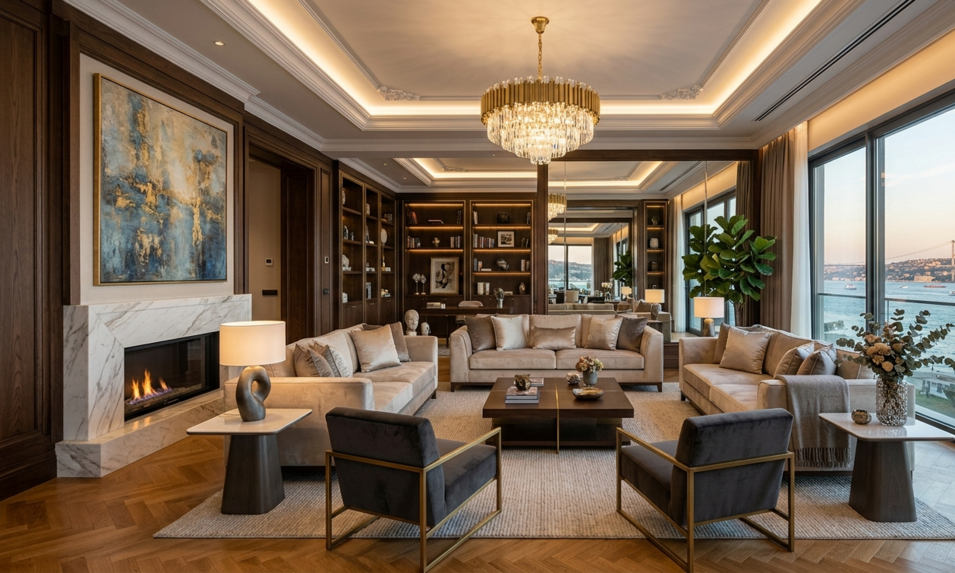
Today, “luxury residential design” represents far more than the creation of high-budget living spaces. It reflects an approach focused on designing distinctive and refined environments that embody the lifestyles, preferences, and aspirations of their occupants.
From an interior architecture perspective, luxury emerges through the seamless integration of aesthetics, functionality, comfort, and technology. It is defined not only by premium materials and impressive dimensions but also by the quality of experience provided to residents.
Designed to meet the evolving expectations of contemporary living, luxury residences offer unique experiences through personalized solutions, carefully selected materials, and innovative spatial configurations.
Concepts such as “timeless design,” “high quality of life,” “smart home technologies,” and “sustainability” have become essential components of modern luxury residential projects, significantly influencing contemporary interior architectural approaches.
The Evolving Meaning of
Luxury Residential Design
Today, luxury residential design is no longer limited to the use of expensive materials or the creation of spacious living environments. Instead, it has evolved into a comprehensive design philosophy that prioritizes exceptional user experiences.
From an interior architecture perspective, luxury encompasses a holistic approach in which users’ needs are fully addressed while aesthetics and functionality are carefully balanced. The goal is to create environments that enhance overall quality of life through thoughtfully designed spatial solutions.
Modern homeowners increasingly value personalized experiences over overt displays of wealth. As a result, contemporary luxury residences focus on creating unique spaces that reflect individual lifestyles and personal preferences.
Concepts such as “personalization,” “comfort,” and “spatial quality” have become the fundamental pillars of today’s luxury residential projects.
Spatial Identity and Design Cohesion
One of the most important interior architectural approaches in luxury residential projects is the creation of a strong spatial identity.
A consistent design language throughout the residence provides occupants with a cohesive and immersive living experience. Every element—from color palettes and material selections to lighting strategies and furniture details—is expected to work harmoniously within a unified concept.
Within this framework, the concepts of “design cohesion” and “spatial continuity” become particularly significant.
Interior architects strive to ensure that although each room serves a different function, all spaces contribute to a coherent overall design vision. This approach allows residents to experience the same level of quality, sophistication, and aesthetic consistency throughout the home.
The Rise of Natural Materials
In recent years, the use of natural materials has become a defining characteristic of luxury residential design. Marble, natural stone, solid wood, travertine, and textured natural fabrics bring both elegance and timeless appeal to living environments.
Today’s homeowners increasingly prefer durable and sustainable solutions over artificial and short-lived trends. Consequently, “authenticity” and “material quality” have become key design considerations.
The combination of natural stone surfaces and wooden elements creates a sophisticated aesthetic while adding warmth, prestige, and visual richness to interior spaces.
The Importance of Open-Plan Living Spaces
Open-plan design has become a widely adopted approach in modern luxury residences. By integrating living rooms, kitchens, and dining areas into a unified environment, designers enhance both spatial perception and social interaction among occupants.
This approach enables interior architects to create larger and more spacious environments while maximizing flexibility in daily use.
The concepts of “fluid spatial planning” and “flexible functionality” are among the key advantages of open-plan design.
Additionally, this layout allows natural light to flow throughout the home, significantly improving comfort and creating a brighter, more welcoming atmosphere.
The Role of Lighting in the Perception of Luxury
Lighting is one of the most critical elements in luxury residential design. A well-planned lighting strategy not only enhances the aesthetic value of a space but also directly influences the user experience.
Interior architects create compelling atmospheres by combining ambient, accent, and decorative lighting layers.
The concepts of “layered lighting” and “atmosphere design” are particularly important in contemporary luxury residences.
Pendant fixtures, concealed LED systems, and custom-designed chandeliers serve as powerful design elements that reinforce the character and sophistication of a space.
Integration of Smart Home Technologies
Technological advancements have significantly transformed luxury residential design. Smart home systems allow residents to control lighting, climate, security, and entertainment systems through centralized platforms.
From an interior architecture perspective, integrating these technologies in a discreet and aesthetically pleasing manner is essential.
Concepts such as “smart living,” “technological comfort,” and “home automation systems” have become indispensable components of modern luxury residences.
As a result, homeowners benefit from enhanced comfort, convenience, and energy efficiency while enjoying a seamless living experience.
The Use of Custom-Designed Furniture
In luxury residences, custom-made furniture is often preferred over standard, mass-produced products. Furniture designed according to the specific needs of homeowners ensures a perfect fit with both the dimensions and overall concept of the space.
This approach enhances the uniqueness of the design while also improving functionality and efficiency.
The concepts of “bespoke design” and “exclusivity” form the foundation of this philosophy. Custom seating arrangements, built-in storage solutions, and design-oriented accessories contribute significantly to the distinctive character of luxury living spaces.
The Concept of Minimalist Luxury
Today, luxury is no longer defined by excessive ornamentation and elaborate decorative details. Instead, refined simplicity and timeless elegance have become the hallmarks of sophisticated design.
The concept of minimalist luxury aims to create spaces that are free from unnecessary elements while maintaining the highest standards of quality and craftsmanship.
“Simplicity,” “elegance,” and “timeless design” are the core principles of this approach. Neutral color palettes, clean lines, and premium materials create calm, prestigious environments that offer both visual and emotional comfort.
The Psychological Impact of Color Palettes
In luxury residential design, color selection is considered not only an aesthetic choice but also a psychological tool.
While lighter shades can make spaces appear larger and more open, darker tones create a sophisticated, dramatic, and powerful atmosphere.
Interior architects develop color strategies tailored to the expectations and lifestyles of homeowners. The concepts of “color balance” and “emotional comfort” play a crucial role throughout the design process.
Beige, cream, stone gray, and earthy tones are among the most frequently preferred colors in contemporary luxury residences, offering a timeless and elegant aesthetic.
The Rise of Spa-Inspired Bathrooms
Bathrooms in luxury residences have evolved far beyond spaces designed solely for functional needs. Today, they are conceived as personal retreats dedicated to relaxation, wellness, and rejuvenation.
Large walk-in showers, freestanding bathtubs, natural stone finishes, and carefully designed lighting systems bring the spa experience into the home environment.
The concepts of “wellness design” and “personal comfort zones” form the basis of this approach.
As a result, homeowners can enjoy private spaces where they can unwind and escape the stresses of daily life.
Dressing Rooms as a Symbol of Prestige
Dressing rooms have become a significant component of luxury residential design. These spaces combine functional storage solutions with sophisticated aesthetics to enhance everyday living experiences.
Custom organization systems, glass-front wardrobes, and carefully planned lighting solutions provide exceptional usability while maintaining a sense of elegance.
The concepts of “organization” and “personalized experience” play a defining role in the design of these spaces, transforming them into both practical and prestigious environments.
The Harmony of Art and Design
Art has become an integral element of luxury residential interiors. Paintings, sculptures, installations, and collectible pieces enrich spaces and strengthen their overall character.
Interior architects view artwork not merely as decorative accessories but as essential components of the spatial experience.
The concepts of “artistic value” and “aesthetic identity” are central to this design philosophy.
When thoughtfully integrated into the interior, art contributes depth, individuality, and a strong sense of personality to living environments.
The Sustainable Luxury Approach
As environmental awareness continues to grow, sustainability has become a key component of luxury residential design.
Energy-efficient systems, recyclable materials, and durable design solutions are increasingly preferred in contemporary projects. Interior architects are developing innovative approaches that reduce environmental impact while preserving aesthetic excellence.
The concepts of “sustainable design,” “environmental responsibility,” and “energy efficiency” have become fundamental values within the new generation of luxury residences.
This approach demonstrates that luxury and sustainability can successfully coexist within modern living environments.
Transitions Between Indoor and Outdoor Spaces
In contemporary luxury residences, the boundaries between indoor and outdoor environments are becoming increasingly blurred.
Large sliding glass systems, seamless terrace connections, and outdoor living areas enable residents to establish a stronger relationship with nature.
Within this context, the concepts of “biophilic design” and “connection with nature” have gained significant importance.
Particularly in urban environments, this integration with natural elements contributes positively to both physical and psychological well-being while enhancing overall living quality.
Conclusion: The New Definition of Luxury
From an interior architecture perspective, luxury residential design represents a comprehensive design philosophy that successfully combines aesthetics, technology, functionality, and personalization.
Today, luxury is defined not merely by expensive materials or expansive floor plans but by the quality of experience provided to residents.
Concepts such as “personalized living,” “superior comfort,” “timeless aesthetics,” and “sustainable quality” have emerged as the defining values of contemporary luxury residences.
As lifestyles continue to evolve, the field of interior architecture will play a crucial role in redefining luxury living through innovative, user-centered, and future-oriented design approaches.
Aydın Yıldız
Brand Consultant
Contemporary Design
Bespoke Interiors
For modern, aesthetic, functional, and comfortable design, project, and implementation solutions, let’s get in touch now for the best interior architecture design ideas, project quotations, and turnkey interior design solutions.