

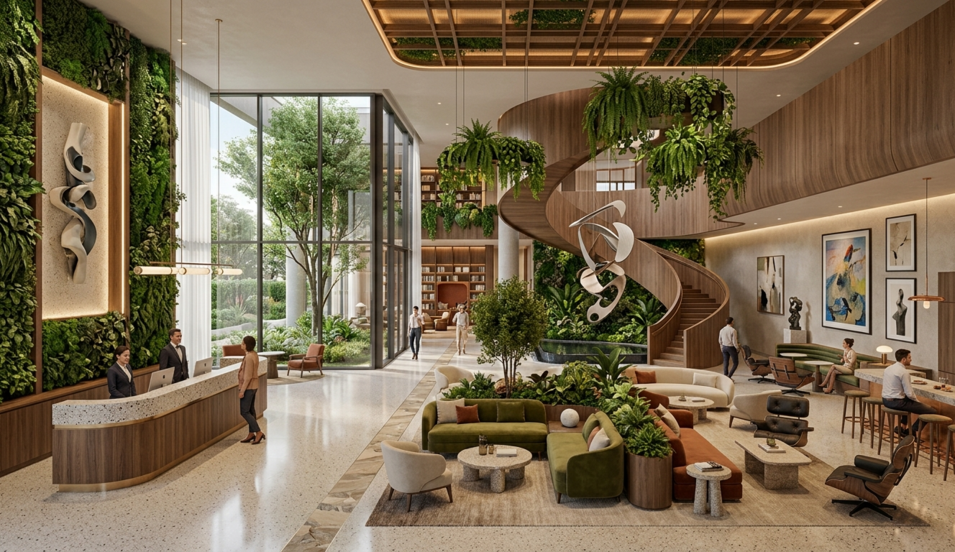
Hotel lobby design is one of the most important elements of interior architecture, reflecting a property’s identity, service philosophy, and the experience it offers guests at first glance.
As the first space guests encounter upon entering a hotel, the lobby is far more than a reception area; it is a strategic environment that tells the brand’s story, builds trust, and creates a memorable first impression.
For this reason, a successful hotel lobby must go beyond aesthetics and integrate fundamental interior design principles such as functionality, user experience, spatial identity, and comfort.
With the evolution of modern hospitality, hotel lobbies have transformed from simple waiting areas into multifunctional living spaces that facilitate social interaction, work, relaxation, and engagement.
This transformation has made hotel lobby design a critical aspect of hospitality projects, directly influencing a hotel’s success from both an investor’s and an interior designer’s perspective.
Hotel Lobby: More Than a Reception Area
A hotel lobby is not merely the entrance of a hospitality property; it is one of the most important spatial elements representing the brand’s character and the starting point of the guest experience.
Within the first few seconds of entering a hotel, guests consciously or subconsciously form opinions about the property.
Therefore, a lobby must not only be visually impressive but also provide a seamless and intuitive experience.
From an interior architecture perspective, successful lobby design emerges through the balanced integration of spatial identity, user experience, functionality, and emotional impact.
The Lobby as the
Heart of the Hotel
Every hotel consists of various functional zones designed to support the guest experience. Public areas, accommodation spaces, food and beverage venues, event facilities, and recreational amenities all operate as interconnected components of a larger system.
However, the lobby often serves as the central hub of this ecosystem.
Guests typically pass through the lobby when heading to their rooms, restaurants, meeting spaces, or wellness facilities.
For interior designers, the lobby is not simply an entrance area; it is the operational and experiential center that connects the entire hotel.
The Power and Psychology of
First Impressions
Research shows that people form opinions about a new environment within seconds.
For this reason, the atmosphere created within a hotel lobby is of utmost importance. Materials, lighting design, spatial scale, scents, and acoustics work together to evoke specific emotions in guests.
The goal of a successful lobby design is to immediately create a sense of belonging, security, and comfort.
When guests feel valued from the moment they arrive, they are more likely to develop positive perceptions of the hotel’s overall service quality.
Consequently, the atmosphere created in the lobby plays a significant role in both branding and marketing strategies.
Spatial Flow and
Circulation Planning
One of the most critical considerations in hotel lobby design is circulation planning.
Guests should be able to see the reception area immediately upon entering and access elevators effortlessly without confusion.
This concept is often referred to as the circulation triangle, which describes the relationship between the entrance, reception desk, and elevators.
In successful lobby designs, user movement patterns are carefully analyzed and every guest journey is spatially optimized.
Complex circulation layouts can create stress and dissatisfaction, whereas clear and intuitive floor plans reinforce perceptions of professionalism and efficiency.
The Strategic Importance of
Reception Design
The reception desk remains one of the primary focal points within a hotel lobby. However, contemporary hospitality trends are reshaping traditional reception concepts.
Large, imposing reception counters are increasingly being replaced by more approachable, human-scaled welcome islands.
Modern hotels seek to eliminate the feeling of waiting in line and instead provide a fast, personalized arrival experience.
In interior architecture, this reflects the principles of human-centered design.
Smart check-in systems, mobile access technologies, and decentralized service stations allow for more efficient use of lobby space.
Reflecting
Brand Identity Through Design
Every successful hotel tells a unique story, and the first chapter of that story begins in the lobby.
Interior designers translate brand values into physical experiences through carefully selected spatial elements.
While boutique hotels may emphasize local culture and authenticity, luxury urban hotels often focus on elegance and prestige.
Colors, artwork, furniture, and materials become storytellers within the space.
The objective is not simply to create a visually appealing environment but to establish a compelling spatial narrative.
Guests should immediately sense the spirit of the destination or the personality of the brand upon entering the lobby.
The Emotional Impact of
Material Selection
Materials are among the most influential design tools in defining the character of a hotel lobby.
Marble, natural stone, solid wood, metal finishes, and textured surfaces each create distinct emotional responses.
Luxury hotels often favor natural stone for its timeless elegance, while contemporary concepts may highlight the contrast between wood and metal.
In interior design, material selection is not only about aesthetics but also durability and maintenance.
Since the lobby is one of the most heavily used spaces in a hotel, materials must withstand intensive use while maintaining their premium appearance over time.
Creating Atmosphere
Through Lighting
Lighting in a hotel lobby serves far more than a functional purpose.
It is one of the most powerful tools for shaping atmosphere and guest perception.
Maximizing natural daylight and integrating changing daylight conditions into the interior environment is essential.
During evening hours, a layered lighting strategy becomes increasingly important.
General lighting, decorative chandeliers, wall sconces, and concealed LED elements work together to create a warm and inviting atmosphere.
This approach, known as layered lighting, directly influences user comfort and spatial quality.
The Evolving Role of
Seating Areas
In the past, hotel lobby seating was primarily intended for waiting.
Today, hotel lobbies function as multifunctional social environments.
Guests use these spaces to work, hold meetings, enjoy coffee, and socialize.
As a result, seating arrangements must accommodate a variety of user needs and activities.
Single lounge chairs, group seating configurations, semi-private workspaces, and lounge zones should be thoughtfully integrated.
This reflects the concept of flexible space utilization, which enhances guest satisfaction by supporting diverse experiences.
The Importance of
Acoustic Comfort
Although high ceilings and expansive volumes create visually impressive lobby spaces, they can also generate acoustic challenges.
Echoes, background noise, and uncontrolled sound propagation can negatively impact guest comfort.
For this reason, acoustic design has become a critical aspect of contemporary hotel lobby planning.
Acoustic panels, textile surfaces, carpets, specialized ceiling systems, and indoor landscaping contribute to sound control.
Increasingly recognized as a key design consideration, acoustic comfort encourages guests to spend more time in the space and enhances their overall experience.
Technology’s Role in
Modern Lobby Design
Digital transformation is fundamentally changing how hotel lobbies operate.
Guests now expect high-speed internet access, conveniently located charging stations, and seamless digital services.
Interior designers must integrate these technological requirements without creating visual clutter.
Power outlets, wireless charging solutions, smart wayfinding systems, and digital information displays have become essential components of modern lobby environments.
The goal is not to showcase technology but to simplify and enhance the guest experience.
The Lobby as a
Social Hub
In contemporary hospitality design, the lobby has evolved into a vibrant social center.
Particularly in urban hotels, the lobby serves as a gathering place where guests meet, work, and spend leisure time.
For this reason, designers must carefully analyze user behavior and create environments that naturally encourage interaction.
This design philosophy is rooted in the concept of social space design, which focuses on fostering community and engagement.
The Contribution of
Art and Decoration
Artwork, sculptures, and distinctive decorative elements strengthen the character of a hotel lobby.
Featuring works by local artists can help establish a meaningful connection between the hotel and its surrounding culture.
For interior designers, art is not merely decorative; it is a powerful tool for creating meaning and identity.
A thoughtfully selected artwork can leave a lasting impression and become an integral part of the guest experience.
Natural Elements and
Biophilic Design
Recent years have seen a growing emphasis on nature-inspired hospitality environments.
Plants, natural stone, water features, and abundant daylight contribute positively to guests’ psychological well-being.
This approach, known as biophilic design, strengthens the connection between people and nature.
By reducing stress and enhancing comfort, biophilic strategies significantly improve spatial quality.
Large indoor gardens, green walls, and natural materials have become common features in contemporary hotel lobbies.
The Hidden Impact of
Back-of-House Operations
A successful lobby experience depends not only on visible design elements but also on efficient back-of-house operations.
Kitchens, staff facilities, storage areas, technical service rooms, and management offices all contribute to the smooth functioning of the hotel.
When these areas are poorly planned, service quality in guest-facing spaces can suffer.
For this reason, operational efficiency is considered just as important as aesthetics in hospitality design.
A well-organized back-of-house system enables a flawless front-of-house experience.
Sustainability and
the Future of Hotel Lobbies
Sustainability has become an essential component of modern hotel design.
Energy-efficient lighting systems, recyclable materials, low-carbon products, and durable furniture provide both environmental and economic benefits.
In interior architecture, sustainable design not only supports environmental responsibility but also enhances brand reputation.
Today’s travelers increasingly prefer hospitality brands that demonstrate environmental awareness and long-term sustainability commitments.
Conclusion: The Formula for
Successful Hotel Lobby Design
Hotel lobby design is far more than a collection of aesthetic decisions; it is a strategic investment.
Creating a strong first impression, enhancing the guest experience, supporting operational efficiency, and expressing brand identity are among the lobby’s primary functions.
A successful lobby combines contemporary interior architecture concepts such as functionality, spatial identity, user experience, acoustic comfort, biophilic design, and sustainability.
In today’s hospitality industry, the lobby is not simply an entrance space—it is the brand’s showcase, the starting point of the guest journey, and one of the most memorable environments within the hotel.
A thoughtfully designed hotel lobby continues to create value from the moment guests arrive until the moment they depart, making a direct contribution to the property’s long-term success.
Aydın Yıldız
Brand Consultant
For modern, aesthetic, functional, and comfortable design, project, and implementation solutions, let’s get in touch now for the best interior architecture design ideas, project quotations, and turnkey interior design solutions.