

In today’s competitive retail environment, increase store sales strategies go far beyond traditional selling methods. Successful stores are no longer designed only to display products; they are carefully planned spaces that influence customer behavior, strengthen brand perception, and create memorable shopping experiences.
New Generation Architectural Approaches That Increase Store Sales:
Transforming Physical Space into a Sales Experience
In today’s competitive retail world, methods that increase store sales have moved beyond traditional approaches focused only on selling more products.
Creating a Stronger Shopping Experience Through Strategies That
Increase Store Sales
Successful stores today focus on understanding customer needs, simplifying the shopping process, and creating an unforgettable in-store experience.
Through the right product placement, effective visual merchandising, attractive window displays, and marketing techniques that influence customer behavior, physical stores can achieve higher sales performance.
Because today, the time customers spend in the store, the connection they establish with products, and the details that influence their purchasing decisions are among the key factors determining sales success.
“Effective store management” has become one of the most powerful tools for transforming visitors into loyal customers.
Today, store success is no longer limited to offering quality products or applying competitive pricing strategies.
From the moment customers step into a store, the experience they have directly affects their purchasing decisions.
Physical stores are no longer seen simply as places where products are displayed, but as experience centers where customers connect with the brand, feel valued, and enjoy the shopping journey.
For this reason, the main goal of businesses that want to increase sales should be creating a “store atmosphere that transforms visitors into customers.”
With a well-planned store layout, engaging visual applications, and personalized marketing techniques, an ordinary shopping visit can become a powerful sales opportunity.
The Power of First Impressions:
The Store Entrance Is the Beginning of the Sales Journey
The first interaction a customer has with a store determines the direction of their shopping behavior. The entrance area is not merely the location of the door; it is a critical point where the customer’s first perception of the brand is formed.
Therefore, the colors used in the entrance area, product placements, campaign messages, and visual arrangements are extremely important. Customers should feel comfortable the moment they enter and feel encouraged to explore the store.
Successful stores do not welcome customers with product overload at the entrance. Instead, they create a controlled and impressive welcoming area.
The goal here is not to make an immediate sale, but to create a sense of curiosity and a desire to discover.
When new-season products, attractive window displays, or seasonal campaigns are positioned correctly at the entrance, customers are encouraged to spend more time inside the store.
Because customers who spend more time in a store have more opportunities to examine products and are more likely to make purchases.
Modern retail design focuses on creating spaces where customers feel comfortable, inspired, and connected with the brand. By understanding customer psychology and optimizing the shopping journey, businesses can increase store sales, improve customer satisfaction, and build long-term loyalty.
Circular Store Layout:
Taking Customers on a Sales Journey
One of the most effective methods in-store planning is the system known as the “racetrack layout,” which guides customers through a specific flow.
With this model, the store stops being an area where customers wander randomly and becomes a planned shopping route.
As customers move along a specific pathway or circulation line, they have the opportunity to see different product categories throughout the store.
The main purpose of this layout is to prevent customers from simply buying the product they came for and leaving immediately.
For example, when best-selling or highly searched products are placed at the back of the store, customers encounter many different categories before reaching them.
This expands the “product discovery area” and increases the possibility of impulse purchases.
A properly designed circular layout does not make customers feel forced into a journey. On the contrary, it makes the store appear more organized, spacious, and professional.
Customers feel as if they are naturally exploring rather than being directed.
Eye-Level Strategy:
Products That Are Seen Sell More
One of the fundamental truths in retail is this:
The product customers notice first has the highest chance of being purchased.
For this reason, the eye-level selling zone is extremely important in shelf organization.
People usually do not carefully examine every shelf from top to bottom. Instead, they naturally focus on the products that catch their attention first.
Stores place their highest-margin products, new arrivals, or strategically important items at easily visible levels.
Lower shelves or less noticeable areas are generally used for products with lower priority.
In addition, creating lifestyle-based product combinations instead of displaying products individually can significantly improve sales performance.
For example, in a clothing store, showing not only a shirt but also matching trousers, accessories, and shoes creates the idea of a “complete shopping solution” in the customer’s mind.
Cross-Selling Techniques:
Increasing Basket Value
One of the most powerful ways to increase sales in stores is not trying to sell customers more products, but understanding their current purchase and completing it in a meaningful way.
This is where the cross-selling approach comes into play. The goal is not to offer unnecessary products, but to suggest solutions that naturally complement what the customer is already buying.
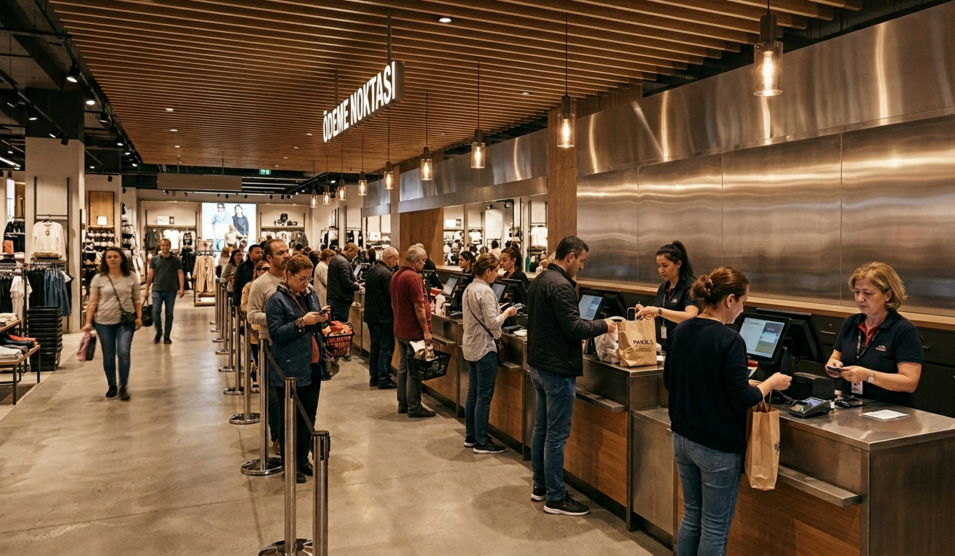
This is why placing small and quick-decision products near checkout areas is highly effective.
When customers reach the payment stage, they may notice small products and add them to their shopping basket. These items create “impulse purchase points” and increase the total sales value.
In successful cross-selling strategies, products are not placed randomly next to each other. Customer shopping habits are analyzed and a natural connection is created.
Examples of this approach include offering a screen protector next to a smartphone in a technology store, or accessories next to clothing items in a fashion store.
Experience Areas:
Bringing Products to Life Instead of Just Displaying Them
Modern consumers no longer want to simply purchase products. They also want to experience the product, feel the brand, and enjoy the shopping process.
For this reason, experience areas created inside stores play a major role in increasing sales.
When customers touch, test, or use a product, their confidence in making a purchase decision increases.
Experience areas are especially effective in technology, cosmetics, furniture, and fashion industries.
For example, instead of keeping products inside closed boxes in a technology store, allowing customers to test devices helps create a connection between the customer and the product.
Similarly, comfortable fitting areas in fashion stores and systems that provide personalized recommendations create “experiences that simplify purchasing decisions.”
Lighting and Visual Atmosphere:
The Silent Salesperson of Retail
One of the most overlooked but highly influential elements in store design is lighting.
Lighting does not only make a store visible; it also affects customer mood, attention, and product perception.
Incorrect lighting can make products appear lower quality, while proper lighting can make products more attractive.
Spotlights applied to special products guide customer attention toward specific areas.
Warm lighting tones create a more welcoming and comfortable atmosphere, while cooler tones in modern and technology-focused stores create a sense of energy and innovation.
Therefore, lighting should be considered a fundamental element of visual merchandising strategy.
Window Design:
Starting the Sale Before Customers Enter the Store
Whether a customer enters a store is often decided within a few seconds while looking at the window display.
For this reason, the window is the store’s advertising face to the outside world.
An effective window design does more than display products; it tells a story.
Successful window displays use a specific theme, color harmony, and an attractive arrangement.
Season changes, special occasions, and brand campaigns can be reflected in window designs to create a feeling of freshness and renewal.
Digital screens, moving visuals, and seasonal concept areas can keep window displays dynamic.
As a result, the store becomes “a place where customers discover something new every time they visit.”
Pop-Up Areas and
Limited-Time Sales Opportunities
One of the strongest psychological effects on customers is the feeling of scarcity.
Products or special campaigns offered for a limited time can accelerate customer decision-making.
For this reason, temporary sales areas created inside stores are highly effective marketing tools.
Pop-up areas allow the store atmosphere to constantly change.
Creating different spaces for new product launches, special collections, or seasonal campaigns keeps customer interest alive.
This approach also gives customers a “special opportunity experience.”
Customers who encounter a different layout every time they visit perceive the brand as more dynamic and innovative.
Personalized Store Experience:
Understanding the Customer
In today’s shopping environment, the same sales approach does not work for everyone.
Customers show stronger loyalty toward brands that make them feel special.
Therefore, personalized service approaches have become increasingly important in stores.
When sales consultants correctly understand customer needs, shape product recommendations accordingly, and communicate sincerely, the possibility of purchase increases.
Technology solutions also support personalization.
Digital screens, customer preference analysis systems, and personalized campaign recommendations make the store experience more effective.
This approach creates a “customer-focused sales culture.”
Conclusion:
Transforming the Store Space into a Sales Machine
Increasing store sales is not only about displaying more products.
The real success comes from designing the entire customer journey correctly — from the moment customers enter the store until they leave.
When product placement, lighting, window design, experience areas, and personal communication work together as a whole, the store becomes a powerful sales channel.
Today’s successful stores do not see customers only as people who make purchases; they see them as visitors who become part of the brand story.
Therefore, the most effective strategy is not “building a store to make sales,” but creating an environment where customers want to buy.
With the right applications, even small changes can create significant improvements in store performance.
Because sometimes what increases sales is not having more products, but how those products are presented to customers.
Aydın Yıldız
Brand Consultant
For modern, aesthetic, functional, and comfortable design, project, and implementation solutions, let’s get in touch now for the best interior architecture design ideas, project quotations, and turnkey interior design solutions.